I just read the most delightful story! I knew instantly I had to share it with y’all.
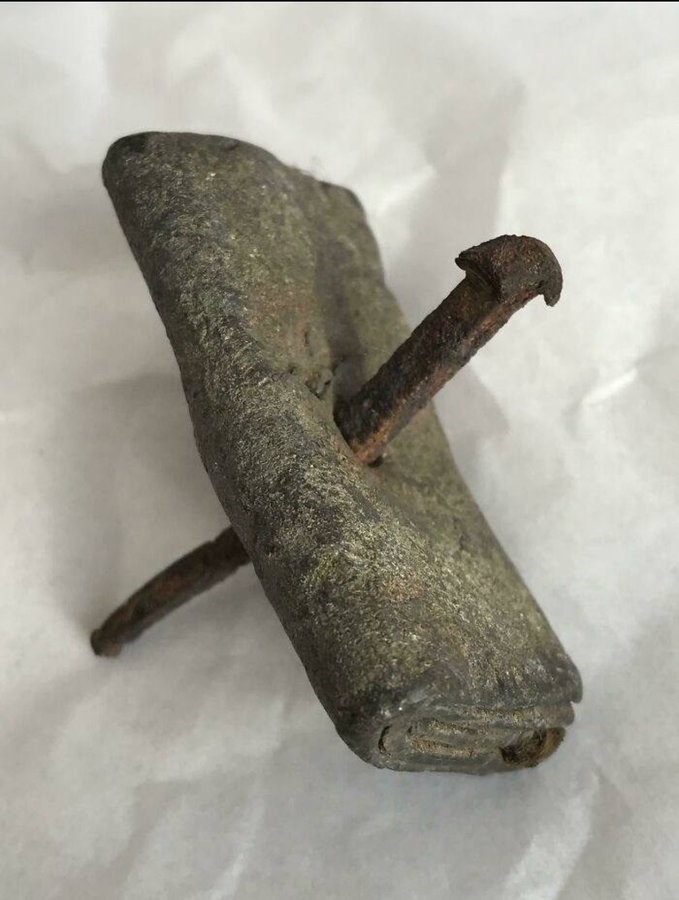
It’s from Greece and it involves curses. Archaeologists discovered some lead tablets in a public well dating back around 2,300 years. The tablets had curses written on them. The one I’m about to tell you about is a curse on a promiscuous woman named Glykera and her vulva!
The way I heard the story, the Greeks believed groundwater led to the streams of the underworld. Water nymphs protected it and directed the curses to the gods of the underworld.
They found a great many tablets in the well. The one I’m telling you about was translated and reads:
We curse Glykera the wife of Dion, to the gods of the underworld so she will be punished and her wedding unfulfilled. I bind down Glykera, the wife of Dion, to Hermes Eriounios of the underworld, her vulva, her debauchery, her vice, and everything of the sinful Glykera.
They used to put the curse tablets in the tomb of a freshly dead person. The corpse could then take the curse to the underworld. Then, around 317 BCE Demetrios of Phaleron became the ruler of the city. He passed a new law forbidding people from putting their curses into tombs. Those clever Greeks found a way around that.
Water nymphs, as I mentioned earlier, protected well water. But… adding some offerings to them along with the curses would appease the nymphs and they would make sure the curse got to the underworld gods.
I’m not sure why this tale delighted me so, but it did. I hope you’ll enjoy it, too!
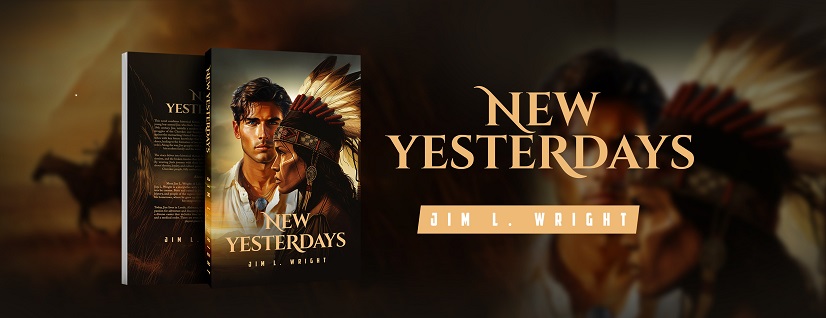
Jim L. Wright is a storyteller with a lifetime of experiences as colorful as the characters he creates. Born and raised in Piedmont, Alabama, Jim’s connection to the land, history, and people of the region runs deep. His debut novel New Yesterdays is set in his hometown, where he grew up listening to stories of the past—stories that sparked his imagination and curiosity for history.
Today, Jim lives in Leeds, Alabama, with his husband Zeek, a tour operator who shares his passion for adventure and discovery. Known affectionately as “Ol’ Big Jim,” he has had a diverse career that includes time as a storekeeper, an embalmer, a hospital orderly, and a medical coder. There are even whispers—unconfirmed, of course—that he once played piano in a house of ill repute.
No matter the job, one thing has remained constant: Jim is a teller of tales. His stories—sometimes humorous, sometimes thought-provoking—are often inspired by his unique life experiences. Many of these tales can be found on his popular blog, Ol’ Big Jim, where he continues to share his musings with a loyal readership.
Jim’s adventures have taken him far beyond Alabama. For seven years, he lived in Amman, Jordan, the world’s oldest continuously inhabited city. His time there, spent in smoky coffee shops, enjoying a hookah and a cup of tea while scribbling in his ever-present notebook, deeply influenced his worldview and his writing.
When Jim isn’t writing, he’s thinking about writing. His stories, whether tall tales from his past or imaginative reimagining is of historical events should read from his past or imaginative reimaginings of historical events, reflect a life lived fully and authentically. With New Yesterdays, Jim brings readers a rich tapestry of history, fantasy, and human connection.
Visit his blog at www.olbigjim.com to read more of his stories, or follow him on social media to keep up with his latest musings and projects, one of which is a series that follows Bonita McCauley, an amateur detective who gets into some very sticky situations.
His book, New Yesterdays, can be found at Amazon US, Amazon UK, Smashwords, and Barnes and Noble.
Any redistribution or reproduction of part or all of the contents in any form is prohibited other than the following:
You may print or download to a local hard disk extracts for your personal and non-commercial use only
You may copy the content to individual third parties for their personal use, but only if you acknowledge the website as the source of the material
You may not, except with our express written permission, distribute or commercially exploit the content. Nor may you transmit it or store it in any other website or other form of electronic retrieval system.
I am a member of The Church of Jesus Christ of Latter-Day Saints who loves to hike, to play music, make amazing fun food, carve wood, grow plants, to read good books and explore the world!
Life is a patchwork of moments — laughter, solitude, everyday joys, and quiet aches. Through scribbled stories, I explore travels both far and inward, from sunrise over unfamiliar streets to the comfort of home. This is life as I see it, captured in ink and memory. Stick around; let's wander together.
"Welcome to The Brit in Transit – your go-to buddy for stories filled with adventures, challenges, and the joy of self-discovery while navigating the wonderful chaos of life across the globe. Hop on board as we kick things off with tales from Washington DC, Florida, New York, and Connecticut, then embark on a thrilling journey through the historic wonders of Greece, Italy, and Spain. Amidst the wild ride of adaptation, our blog is here to share the laughter, unique experiences, cultural quirks, and even a bit of love. Join us in this friendly narrative that spans across diverse landscapes, from Europe to the United States and beyond. Come along for a dose of growth, resilience, and the ongoing pursuit of a seriously meaningful life abroad. Start your friendly adventure with The Brit in Transit today!"


 olbigjim
I guess I wouldn’t want my name on a curse. It’s been 2500 years and now we all know Glykera was fast and loose. Thanks for sharing, Jim.
LikeLiked by 1 person
Yep, Glykera was a trifling hussy!
LikeLiked by 1 person
And now we all know it.
LikeLiked by 1 person
Lead tablets in a well, what could possibly go wrong with that?
LikeLiked by 3 people
I’m sure the water nymphs would’ve filtered that out… Wouldn’t they?
LikeLike
It looks like 10 years later Athens fell. But probably not related;)
LikeLiked by 1 person
It IS interesting to learn about the beliefs of the past.
LikeLiked by 1 person