The dust was the first thing. It coated his tongue, filled his nostrils, a fine, gritty powder kicked up by thousands of weary feet. It hung in the air, turning the fierce Levant sun into a dull, bronze coin. This was the air of Jenin camp. This was the air of their new world.
Khalid stood at the edge of the vast, sprawling chaos, his younger sister, Layla’s, small hand gripping his like a vise. On his back, their father, Amin, slumped, his breathing a shallow, painful rasp. The journey from Al-Lydd had stolen the last of his strength. They had nothing but the clothes on their backs and a single sack holding a few rounds of bread, a clay jar of water, and their mother’s embroidered thobe, which Layla had resolutely refused to leave behind.
The noise was a physical force. A cacophony of wailing infants, shouted names, and the hacking coughs of the sick and elderly. Arguments erupted over the few patches of shaded ground. Beneath it all was a low, constant hum of grief, a sound so profound it seemed to vibrate in Khalid’s very bones. UN officials in crisp, clean uniforms moved through the throngs, their faces a mixture of pity and overwhelmed exhaustion, their instructions drowned out by the tide of despair.
He found a space against a crumbling stone wall. There was no semblance of privacy. He gently lowered his father to the ground. Amin’s eyes were closed, but a single tear traced a clean path through the grime on his cheek. Khalid’s own heart felt like a stone in his chest. He had left everything behind. The small stone house with the lemon tree that his grandfather had planted. The smell of his mother’s maqluba warming in the hearth. His books, his father’s tools, the view from his window of the Jerusalem hills turning gold at sunset. He had left behind his best friend, Firas, who had fallen to a sniper’s bullet on the road out of town. He had left behind his mother, buried hastily in their own garden after the shelling.
He looked at Layla, her big, dark eyes wide with a terror she was too young to fully comprehend. He saw his father, a proud man, a teacher, now broken and hollowed out. This was who he was with. This was all he had left.
His hopes for the future, once bright and specific—to study engineering in Jerusalem, to build bridges and roads for a new nation—had been crushed into a single, desperate grain: survival. To find water that wasn’t foul. To get a blanket before night fell. To keep Layla and his father alive for one more day. The grand future had shrunk to the next hour, the next breath.
As the sun began to set, casting long, distorted shadows through the dust, a man with a kind, weary face and an armband approached. He handed Khalid a thin wool blanket and a small slip of paper with a number scrawled on it.
“This is your plot number,” the man said, his Arabic accented. “You will build your shelter here. There will be rations in the morning.”
Khalid stared at the slip of paper. Plot 7B. It felt insultingly small, a meaningless digit to define their existence. He looked at the empty patch of hard, packed earth. This was not land. It was not home. It was a number.
The man moved on. Khalid unfolded the blanket, its rough texture a stark contrast to the woven carpets of his home. He wrapped it around Layla’s trembling shoulders. He sat beside his father, the stone wall cold against his back.
He reached into his pocket and pulled out the one thing he had that the soldiers had not cared about, the one thing that held no value to them but was everything to him. A heavy, iron key. The key to their house in Al-Lydd.
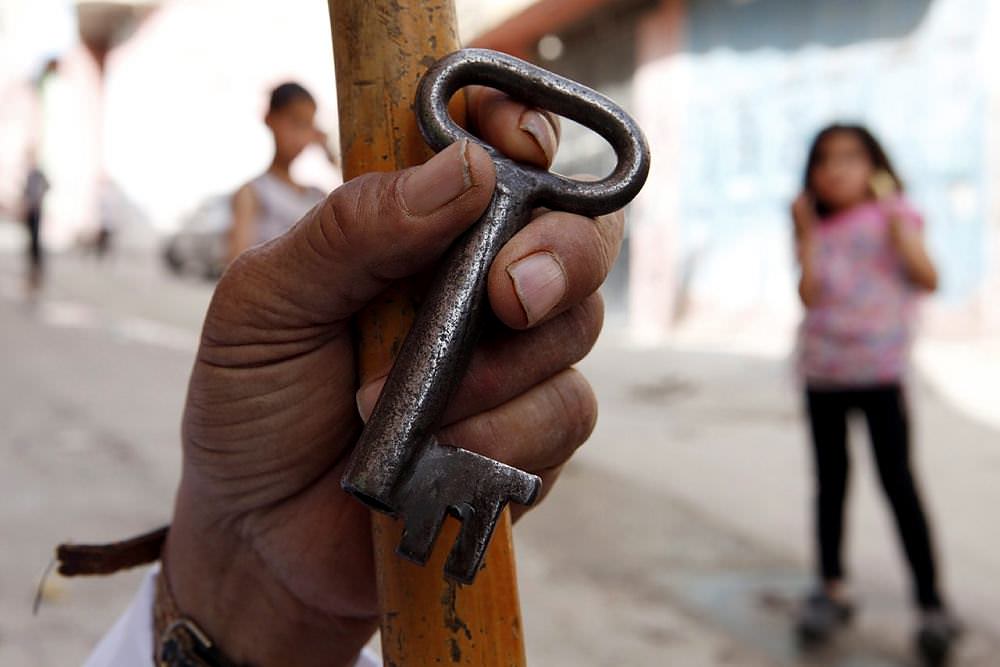
He closed his fingers around it, the metal biting into his palm. The hope for a future of bridges and roads was gone. But a new, harder hope was forged in that moment, tempered by loss and grief. It was not a hope of building, but of returning. It was a dark, stubborn flame that would not be extinguished.
He would keep them alive. He would remember the way. He would tell Layla stories of the lemon tree until she could smell its blossoms in her dreams. And one day, he swore to the setting sun, to the dust, to the memory of his mother, he would put this key back in that lock. He would go home.
The night fell, and the camp was swallowed by a darkness punctuated by small, flickering fires and the endless sound of crying. Khalid held the key tight, his knuckles white. The waiting had begun.
*****
And, you know I mustn’t neglect the obligatory shameless self-promotion. New Yesterdays is available through the following links: Books-A-Million, Barnes & Noble, and Amazon as well as your favorite bookshops. The Audiobook is available from Libro.fm, as well as Amazon.



 olbigjim