Eli was the second son of old Jeremiah, who owned the finest stretch of bottomland along the Coosa River this side of Birmingham. It was good, rich land that smelled of black earth and promise. Eli had a brother, Hezekiah, who was the firstborn and carried himself with the solemn gravity of a crown prince waiting for his throne.
The trouble began, as it often does, not with a great evil, but with a small, proud thought. Jeremiah was a man of rigid ways, who saw the world in straight furrows and believed a man’s word was a nail you drove into your own reputation. Eli, now, he had a touch of the poet in him. He saw the curves in things, the music in the wind. He’d rather sit and whittle a piece of pine into a fiddler than count bushels of corn.
The final split came over a mule. Not just any mule, but a stubborn, hammer-headed jack named Balthazar that Hezekiah had bought at a ruinous price. Eli, who had a way with creatures, said the beast was sour and would break a man’s leg as soon as look at him. Hezekiah said it was a matter of will. Old Jeremiah, in a rare moment of foolishness, sided with his firstborn.
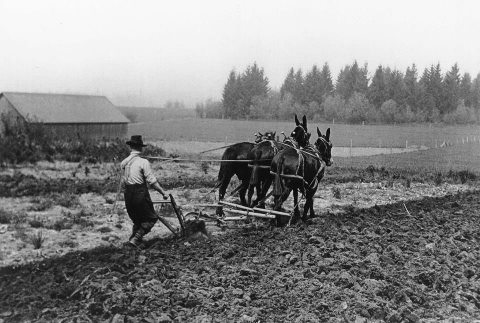
A week later, Balthazar lived up to his billing, kicking over a lantern in the barn. The whole structure went up like tinder, taking with it the winter feed and Jeremiah’s prize plow. In the smoking ruin, with Hezekiah standing silent, Jeremiah turned on Eli. His face was like thunder.
“I told you,” Eli said, his voice quiet amidst the crackling embers.
“You told me?” Jeremiah roared. “Your ‘I told you so’ is colder comfort than last year’s ashes! Your gloating is a poison in this family!”
Eli hadn’t been gloating. He’d been pleading, from a place of hurt pride and being right. But the old man saw only defiance. In a voice that carried across the charred field, he spoke words that can’t be unspoken. “A son who sows scorn for his brother reaps nothing but briars. You have no share in this land. Get your shadow off my property.”
And that was that. There was no trial, no appeal. A man’s word was a nail, and Jeremiah had driven one right through his own heart. Eli left with the clothes on his back and the dust of the lane for company. He was nineteen years old.
That was nigh on thirty years ago. He drifted, as banished men do. He worked on steamboats until the railroads put most of ‘em out of business. He tried his hand at prospecting out west and came back with empty pockets and a cough. He never married, never put down roots. How could he? His taproot had been cut clean through, back on that bottomland.
The sorrow wasn’t in the hard living, though there was plenty of that. The sorrow was in the small things. The smell of woodsmoke on an autumn evening that smelled just like his autumns. The sight of a family gathered on a porch, their laughter carryin’ on the still air. The way a man would speak of his mother’s cooking, or his father’s hands. Eli had become a ghost in his own life, hauntin’ the places that weren’t home.
He’d heard, through the river of gossip that eventually finds its way everywhere, that Jeremiah was dying. The old lion was finally laid low. Hezekiah, of course, had the farm. Eli was working in a livery stable in a town two days’ ride away when a traveler brought the news.
A sensible man would have gone. A forgiving man would have gone. But Eli was a banished man, and the words still stood. A man’s word was a nail. To return would be to pull that nail out with his own hands, and he feared what he might find festering beneath it—more anger, or worse, pity.
So, he did not go home. He stayed in that livery stable, currying horses that weren’t his, in a town that didn’t care. And on the evening they buried Jeremiah next to his wife in the rich soil of that bottomland, Eli was sitting on a barrel outside the stable, looking down the road that led south, toward the river.

He wasn’t cryin’, not out loud. But his shoulders had a slump to ’em that spoke of a weight a man wasn’t meant to carry. He was a book with the most important chapter torn out, a song missing its key verse. He was free to go anywhere in this wide country, sir, absolutely free—and that was the very heart of his prison. For the only place he was forbidden to go was the only place that had ever mattered, and the man who held the key had just been laid in the ground.
—–
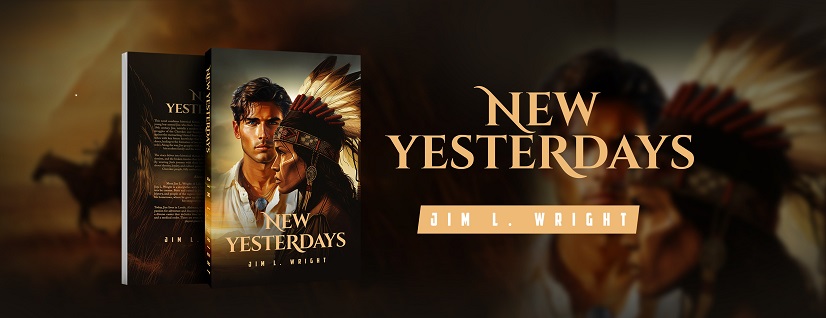
And, you know I couldn’t possibly neglect the obligatory shameless self-promotion. New Yesterdays, a very nice Christmas stocking stuffer, is available through the following links: Books-A-Million, Barnes & Noble, and Amazon as well as your favorite bookshops. The Audiobook is available from Libro.fm, as well as Amazon.



 olbigjim
Made me cry!
LikeLiked by 1 person
Poor Eli. My heart aches for him. Thanks for coming by today, Karla!
LikeLike
This is such a well-written poignant story, Jim. It definitely gets to my heart.
LikeLiked by 1 person
Thank you so much, Tim!
LikeLiked by 1 person
😊
LikeLiked by 1 person