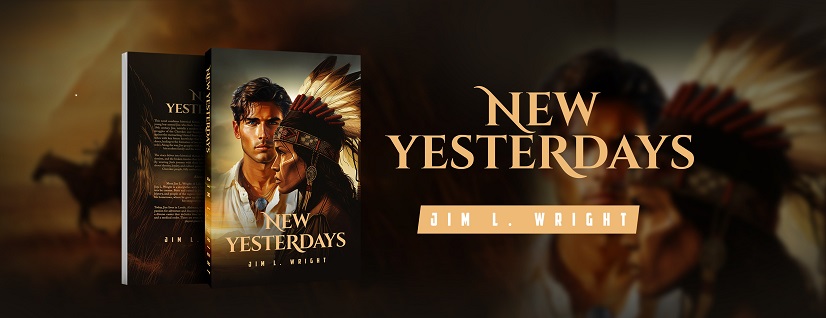
A storm, a grave, and a promise too strong to fade.
In the small, sleepy town of Piedmont, nestled in the Appalachian foothills, a story doesn’t die easy. It gets told and retold ‘til it’s half memory, half myth. And every time the thunder rolls, somebody brings up the night Curtis Cartwright came home. The inhabitants were accustomed to the whims of nature. But this night felt different, charged with an almost palpable energy.
They say you can still smell that storm, even now. The air was thick with the scent of iron, cedar, the threat of rain, and the smoke of lightning where it split the hill, a prelude to the storm that was to come. The wind howled through the trees, their branches creaking and groaning like the bones of ancient giants. The clouds rolled in, a dark and ominous mass that blotted out the stars.
The blast of lightning, a jagged spear of white fire, rent the heavens asunder, casting the Old Piedmont Graveyard in a flash of brief, eerie illumination. The tombstones, weathered and worn by the passage of time, stood as silent sentinels, their shadows dancing macabrely in the sudden glare.
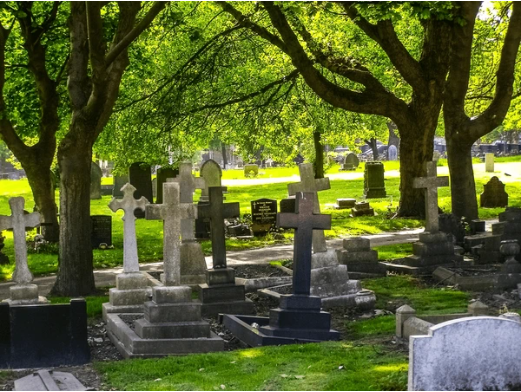
As the first drops of rain began to fall, a figure emerged from the shadows, a man cloaked in a long, dark coat, his face obscured by the brim of his hat. He moved with a purpose, his steps measured and deliberate, as if drawn by an unseen force to the very heart of the graveyard.
Ol’ Margaret Hoskins tells it first, as she always does, rocking on her porch with her Bible open on her knee even though she ain’t read a line in twenty years.
“I saw him, I surely did,” she says. “Hat in his hand, standin’ right by that gate in the pourin’ rain. Talkin’ to her grave like it could answer back.”
From the corner, ol’ man Hunt spits a stream of tobacco juice and shakes his head.
“Wasn’t no talkin’, Margaret. That man was prayin’. I heard him myself. Storm carried his voice clear down to the river. He said her name like it was the only word he ever learned.”
Somebody else laughs, one of the Carter boys, who never knew Anna or John but grew up on the story.
“You sure that wasn’t the thunder?” he says.
And Mrs Hoskins fixes him with that cloudy eye.
“Thunder don’t cry, boy.”
The laughter dies then, just as it always does.
Every year, new folks come, new tellers of the same old tale. At the feed store, the clerk says her granddaddy once found two sets of footprints in the churchyard mud — one heavy, one bare, small as a girl’s.
At the Huddle House, folks swear the radio goes to static when the lightning starts, and in that white noise, if you listen hard, you can hear a woman humming.
The preacher, Reverend Archie Martin, who’s only been in Piedmont two years and doesn’t like to even look toward that graveyard when he drives past, tries to tamp it all down on Sundays.
“Superstition!” he bellows from the pulpit. “The Lord alone commands the dead.”
But after service, when the rain starts tapping on the roof, folks notice he’s pretty quick to hurry home.
By the time the story reached the children, it had taken root and grown branches. They whisper it at sleepovers and dare each other to run to the gate.
“If you say her name three times,” they tell each other, “You’ll see her in the flash.”
Some say they have.
One boy — grown now and long gone from Piedmont — once swore he saw two figures in the storm light, not ghosts but lovers reunited in the flash of white, faces close, hands clasped. “Didn’t look sad,” he said. “Looked like they’d been waitin’.”
That’s how it goes here. Each voice adds a word, a turn, a shiver.
So, when the thunder grumbles, and the wind rises, when the sky goes bone-white over Piedmont Graveyard and the rain smells of ozone and old sorrow, the folks of Piedmont fall quiet.
And if you ask what they’re listenin’ for, they’ll tell you the same thing, low and sure:
“For the promise that outlived the grave. For Anna and John. For the storm that never quite ended.”
Because in Piedmont, even lightning learns to linger.
Epilogue
Last summer, a woman from the Atlanta Journal-Constitution came through. She was a historian doing a book on “Southern hauntings.” She’d heard the legend, thought it quaint, and said she wanted to “trace its folkloric origins.” The locals smiled and pointed her toward Old Piedmont Graveyard.
She came back pale as a sheet. Said the air up there was colder than it ought to be, and that the cedars bent like they were watching her. She found Anna Cartwright’s grave easy enough — white stone, letters still sharp, a little lichen on the edge. She took her pictures. Then she swore the clouds rolled in out of a clear sky.
Said lightning lit the whole hill, just for a heartbeat.
She didn’t talk about what she saw. Only that she left her notebook by the grave, pages fluttering in the wind.
A week later, a farmer found that same notebook halfway down the hill. The pages were soaked, words washed to ghosts of ink — all but one line, pressed hard enough to leave an imprint even through the rain:
They looked happy.
Now the story has a new verse, a new teller. The folks in town nod when they speak of her — that woman from Atlanta who saw them in the light.
And every year, when summer turns heavy and the sky bruises purple over Piedmont, somebody says it again, soft as thunder rolling over the fields:
“Even now, they’re still waitin’ on the hill.”
*****
And now, if you’ll indulge me, I’ll throw in this bit of shameless self-promotion. New Yesterdays is available through the following links: Books-A-Million, Barnes & Noble, and Amazon as well as your favorite bookshops. The Audiobook is available from Libro.fm, as well as Amazon. If you didn’t find your copy in the ol’ Christmas stocking, click any of these links to get it today! Ol’ Big Jim will thank you a hundred thousand times.



 olbigjim
Loved it, Jim.
LikeLiked by 1 person
Thank you, John!
LikeLike
Fascinating story of the Piedmont graveyard, Jim.
LikeLiked by 1 person
Thanks, Tim! Graveyards are such inviting places with a million tales to tell, aren’t they?
LikeLiked by 1 person