A Piedmont Porchlight Story
John Oliver Eubanks had lived in the Mill Village long enough to learn the sound of quittin’ time by ear. He knew the whistle’s moods. He knew when it meant supper was waitin’ and when it meant something had gone wrong inside those deep red brick walls. He was a thinkin’ boy in a place that preferred its boys busy, which is how he came to be walking out around Vigo one afternoon instead of fishing or getting into the sort of trouble that came with witnesses.
The tree wasn’t easy to find, which was the first sign it was old.
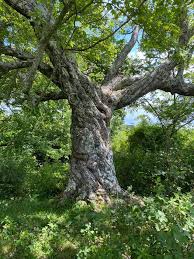
It stood back from the road where the ground dipped and twisted like it had once been decided on and then forgotten. The bark was thick and folded, layered the way time stacks itself when nobody interrupts. It was wider than a house door and taller than most good intentions.
John Oliver didn’t mean to stop. He just did.
That’s how the important things usually begin.
There was a feeling to the place. Not spooky, not holy, just attentive. Like the air was waiting to see what kind of boy he was gonna be about it. He reached out and touched the bark, more to prove to himself that it was real than anything else.
That’s when the knowing arrived.
It didn’t come as words. It came as certainty.
He knew which men in the mill lied to their wives and which lied to themselves. He knew which foreman would get promoted and which would disappear quietly. He knew which marriages would last because they bent, and which would break because they stood too stiff.
It frightened him.
He pulled his hand away, heart thudding, but the knowing didn’t leave. It settled. It waited.
John Oliver sat down hard in the leaves and tried to breathe. The tree didn’t speak, not out loud anyway. It didn’t explain itself or apologize. It simply continued being what it was, ancient and unconcerned with consent.
After a while, John Oliver understood something else.
Knowing was not the same as understanding.
The tree could show him outcomes, tendencies, patterns worn smooth by repetition. It couldn’t tell him what it felt like to be inside them. It couldn’t tell him how it hurt to choose wrong or how hard it was to choose right when no one was watching.
That part was still his.
He stood up and backed away slowly, like you do from something powerful that hasn’t yet decided what it thinks of you. Before he left, he said thank you. It felt necessary, even if foolish.
That night at supper, John Oliver listened more than he spoke. He watched his parents carefully, the way you do once you realize they aren’t permanent fixtures. He noticed how tired his father was, how patient his mother pretended to be.
The tree hadn’t told him what to do with any of it.
That was the lesson.
John Oliver never went back. He didn’t need to. The knowing faded some, softened into intuition, into caution, into a habit of pausing before saying what he already understood.
Years later, folks would say John Oliver Eubanks had good sense. That he saw things coming. That he knew when to leave and when to stay.
They were half right.
He knew what the tree had given him was dangerous if handled carelessly. Knowledge without mercy is just another kind of cruelty, and he had no desire to become that sort of man.
That ol’ tree still stands out there around Vigo somewhere, or so people say. It hasn’t offered its knowing to just anyone since. Old things learn discretion, too.
And if you ask John Oliver about it now, he’ll tell you this:
Some truths are best learned slowly, the long way around, with room left for kindness.
Then he’ll change the subject, because wisdom that stays humble knows when to sit quietly and let the porchlight do the talking.
⁂
New Yesterdays can be found at: Books-A-Million, Barnes & Noble, and Amazon, as well as your favorite bookshops. The Audiobook is available from Libro.fm, as well as Amazon.


 olbigjim