When you leave a place like Piedmont, you think it’ll stop changin’ once you’re gone, like a photograph pinned in time. But it don’t. It grows crooked in your absence.
The hardware store where I worked summers with Clyde still smells like oil and dust, though the sign’s faded and the bell above the door doesn’t ring anymore. The church steeple leans a little to the west now, and somebody painted over the water stain on the ceiling, but I can still see the outline where it used to look like the face of Jesus if you squinted just right.
I walked the length of Ladiga Street, and every step felt like trespassing on memory. A few folks looked up when they saw me. Some nodded slow, others turned away. I can’t say I blamed ‘em. The last time they saw me, I was just a wild boy shouting the truth nobody wanted to hear.
They called it blasphemy back then.
I called it family.
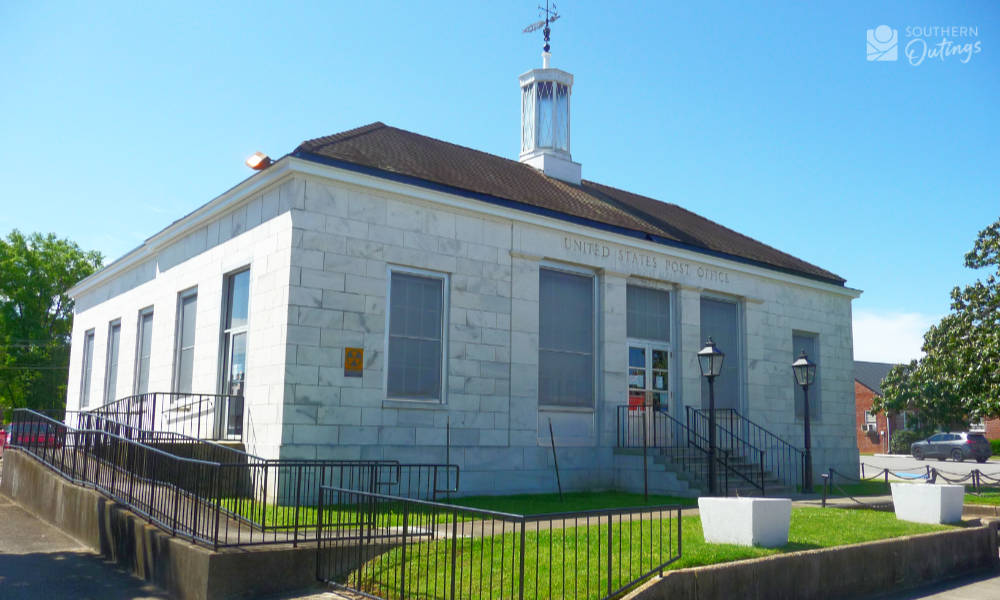
I stopped in front of the post office. There’s a bulletin board there; obituaries, church socials, lost dogs. And right in the corner, half-covered by a faded flyer, was a picture.
Black and white. Me and Aunt Lily Pearl, the summer before it all fell apart. Someone had tacked it up like a relic, a reminder of the town’s great shame.
I took it down and folded it careful into my coat pocket.
That’s when I heard the door creak open behind me.
“You lookin’ for forgiveness or trouble, Tommy Wayne?”
It was Sheriff Luther Cole. He’s grayer now, but his eyes are the same. Steady, tired, and not easily fooled.
“Guess that depends on what’s easier to find,” I said.
He studied me a moment, then sighed. “You always had a way of stirrin’ up what ought to be left settled. You know that grave out at Highland ain’t been right since you come back.”
I didn’t answer.
“Folks are talkin’,” he went on. “Oliver says he heard Lily Pearl’s whistle. Eustace swears he saw her shadow by the creek. You and me both know she’s dead and gone, so why’s her name on everybody’s lips again?”
I looked down the street, where the sun was spillin’ gold over the storefronts, and for a second, I thought I saw her again, that same shape at the edge of sight, apron fluttering like it used to on the porch.
“I reckon some things don’t stay buried, Sheriff,” I said. “Not bones. Not truth. Not her.”
He looked uneasy then; thumb hooked on his belt like he didn’t want to draw too close to what he couldn’t explain.
“You ought to come by my office tomorrow,” he said. “We’ll talk proper. I’ve got questions.”
“So do I,” I said. “And I got a feeling the answers are older than both of us.”
He tipped his hat, turned, and walked off toward City Hall, leaving me in the long shadow of the post office.
And for the first time in fifteen years, I realized the sound I’d been running from had never been thunder or guilt.
It was the ticking of something I’d left undone.
*****
New Yesterdays can be found at: Books-A-Million, Barnes & Noble, and Amazon, as well as your favorite bookshops. The Audiobook is available from Libro.fm, as well as Amazon.


 olbigjim
Fascinating tale of Tommy Wayne coming home and facing situations, Jim.
LikeLiked by 1 person
Thanks, Tim!
LikeLiked by 1 person
You’re welcome, Jim. 😊
LikeLiked by 1 person