
For all the fiery sermons about holiness, I learned early on that the Congregational Holiness Church was filled with people who were every bit as human as the rest of creation. They carried fears, secrets, laughter, grudges, and the occasional fascination with the bootlegger who lived two ridges over and operated his still with more discretion than the FBI.
Now, holiness folks did not approve of liquor.
They preached against liquor.
They warned that a drop of it could send a man straight to perdition without the courtesy of a second opinion.
But even as a boy, I noticed that the same men who hollered loudest about temperance were sometimes the same ones who walked out to Pruett’s Shell Station on Friday nights lookin’ guilty as a fox in a henhouse.
Pruett’s Shell was the sort of place where sin loitered in the parking lot. The bathroom key was attached to a block of wood the size of a banjo. The soda machine stole quarters with a smirk. The payphone out front could connect you to half the county’s gossip in under fifteen minutes. I once saw old Brother Herman there dressed in what he swore was a “work disguise,” though it looked suspiciously like his Tuesday clothes.
He told the attendant, who was leanin’ on the counter like an underfed scarecrow, that he was lookin’ for a quart of transmission fluid. I stood there holdin’ a pack of chewing gum, watchin’ the man offer up a story shakier than a table at a yard sale. The attendant pointed at the shelf behind him without lookin’ up.
Brother Herman squinted.
“I mean a special kind of fluid. For a special kind of transmission. Some folks call it… shiner-grade.” He whispered that last part like it was classified information.
The attendant kept leanin’ and kept starin’.
“You mean liquor?”
Brother Herman stiffened, glanced around the store, and declared loudly that he was merely conductin’ a private investigation into community vice as part of his Christian duty. The attendant moved his toothpick from one side of his mouth to the other. He did not comment.
That was the nature of holiness folks. All conviction and very little camouflage.
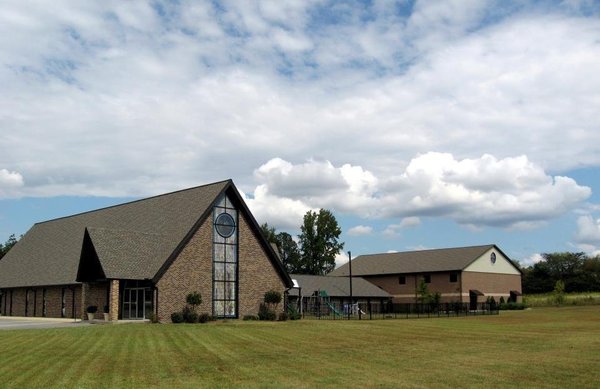
Backsliders were another curious species. A backslider was any church member who had loosened their moral grip for more than thirty-seven seconds. Maybe they skipped service to go fishin’. Maybe they let a cuss word slip when they stepped on a rake. Maybe they danced at a wedding reception and regretted it for the next six months. The church classified these offenses with great seriousness, though the sinners themselves usually carried them out with a shrug.
I learned to spot backsliders from my seat in the second row. They entered the sanctuary slow, thinkin’ no one would notice, then bowed their heads down as if the Lord Himself had assigned the ceiling tiles to follow the movement of their shame. Sister Loretta, a champion whisperer and full-time pew watcher, could diagnose a backslider from fifty feet away.
“Looks like Brother Floyd’s been missin’ church again,” she’d say.
And someone would whisper, “Fishing trip,” with the kind of solemnity normally reserved for funerals.
I could never understand why fishin’ was considered a gateway sin, but I assumed it involved worms of an unchristian persuasion.
The good-mannered sinners were my favorites. These were folks who knew exactly what the Bible said, had no intention of followin’ most of it, but kept up polite appearances. They tithed. They shook the preacher’s hand. They brought chicken casserole to every potluck, even the funerals of people they had met only once at the post office.
These were the folks who winked at you in church and whispered things like, “Son, your mama means well, but the Lord knows your daddy is the one who actually disciplines you.”
They were always generous. Always friendly. Always prepared with a story that began with, “Now I do not condone this sort of behavior, but let me tell you what happened last Saturday night.” I listened with wide eyes as they recounted tales about uncles who lost money at crap games, or cousins who disappeared during squirrel season and returned with stories that didn’t match the weather report.
And the best part was this.
The good-mannered sinners were rarely afraid of the Second Coming.
They figured Heaven had a special room for folks who tried hard, kept mostly clean, and behaved themselves in front of the preacher. They had a quiet confidence the rest of us envied. They walked through life with the ease of people who believed the Lord would overlook their minor missteps because they smiled often and did not use His name in vain unless it was for emphasis.
I once asked Sister Elsie how she stayed so calm in church when the preacher hollered about fire and brimstone. She patted my hand and said, “I raised four children. Hell can wait its turn.”
That was wisdom I carried with me.
The truth is this.
The Congregational Holiness Church was filled with complicated, lovable people who tried hard, stumbled often, judged occasionally, repented loudly, and sinned in small, creative ways. They feared God, and they feared each other’s opinions, but they also loved fiercely and forgave quickly when the mood struck.
You don’t find people like that everywhere.
And though they scared me half to death sometimes, I knew they were mine, and I was theirs.
It took me years to understand it, but those contradictions made the place holy in its own peculiar fashion.
And without them, I reckon northeast Alabama would have been a much duller place to grow up.
New Yesterdays can be found at: Books-A-Million, Barnes & Noble, and Amazon, as well as your favorite bookshops. The Audiobook is available from Libro.fm, as well as Amazon.



 olbigjim
Excellent, Jim. 😁
LikeLiked by 1 person
Thanks, John!
LikeLiked by 1 person
😊
LikeLiked by 1 person
Fascinating tale of the contradictions, Jim. It reminds me of my mom saying that Jesus’s first miracle was making wine from water for a wedding.
LikeLiked by 1 person
Thanks, Tim! It was an interesting experience growing up in that atmosphere.
LikeLiked by 1 person
It sure was, Jim.
LikeLiked by 1 person