A Piedmont Porchlight Story
Piedmont has produced its fair share of unusual characters. Saints, sinners, and folks who wandered back and forth between them categories like they was shoppin’ for discounts. But none of them ever held a candle to Deacon Virgil B. Thatch, a wiry Methodist gentleman who believed, with the confidence of the Prophet Isaiah and the posture of a fence post, that the Almighty had granted him the gift of bovine divination.
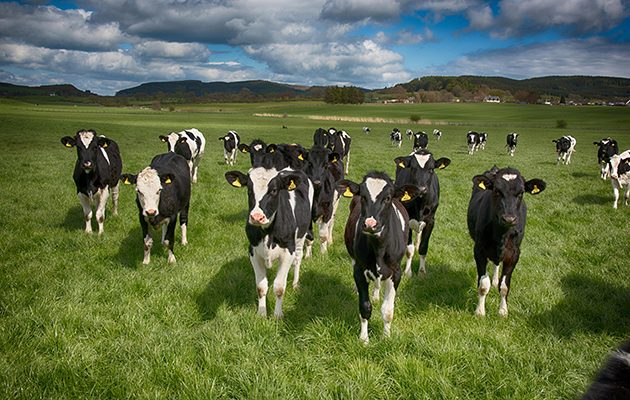
Now, most folks in town read their newspapers or listen to the radio. Some consulted the Farmer’s Almanac. A few, more spiritually ambitious, pretended to hear whispers in the wind. But Deacon Thatch didn’t bother with such earthly malarkey. He simply pointed his chin toward whatever pasture bordered the road and studied the cows like a scholar examinin’ ancient scrolls.
“Son,” he once told me, tappin’ his temple like Moses revealin’ commandments, “a cow knows. Never doubt it. They stand in communion with forces older than Scripture.”
I believed him in the way a child just natcherly believes the first adult bold enough to say nonsense with a straight face.
Deacon Thatch carried a notebook, fat as a Sears and Roebuck catalog and twice as confusing, filled with cryptic chicken scratches titled “THE SIGNS.” He spent entire afternoons jottin’ down observations such as:
“Cows facin’ north means a cold snap is comin’.”
“Cows facin’ south means revival services will be powerful.”
“Cows facin’ east means the Baptists are up to somethin’.”
“Cows facin’ west means avoid the fried chicken at the Gateway Restaurant.”
He was wrong more often than right, but he had a talent for explainin’ away his failures in a manner that left you feelin’ foolish for ever doubtin’ him.
If he predicted rain and the sun shone all day, he would nod solemnly and say, “Well, the cows warned me, but the Good Lord overruled. I am but His humble interpreter.”
If he predicted a revival that fizzled, he would close the book and say, “I gave folks too much credit. The cows read their hearts better than I did.”
His faith in them cows never wavered.
Their faith in him was harder to measure, though I suspect they tolerated his presence because he scratched ’em on the nose and spoke kindly to them about their prophetic responsibilities.
One summer afternoon, the Methodists nearly elected him an honorary bishop because he predicted a thunderstorm would arrive at precisely three forty-two in the afternoon. And by some miracle of atmospheric mischief, a crack of lightning split the sky at three forty-three. Folks cheered. Deacon Thatch bowed modestly. The cows chewed their cud and refused to comment.
But the story that solidified his legend happened the year Piedmont nearly had a run-in with a tornado.
The sky turned the color of old bruises. The air grew still as a held breath. Every dog in town hid under its porch. Folks were turnin’ on weather radios and packin’ cellars when Deacon Thatch drove out toward the Richardson pasture and squinted at the cows.
His face went pale.
He jumped in his pickup, tore down the highway, and burst into the Methodist fellowship hall hollerin’ that folks needed to take cover right then. The congregation ran for the basement, knockin’ over punch bowls and Sunday School charts on their way.
But the strange thing was this.
The tornado never touched Piedmont at all.
It lifted just before the ridge and passed over us like a giant, uninterested spirit.
Folks thanked the Lord and then turned to thank Deacon Thatch.
“Your cows saved us again,” they told him.
He nodded gravely.
“That’s their sacred duty.”
But I happened to catch Deacon Thatch later that evening, sittin’ alone in his truck, lookin’ troubled.
He confessed a secret.
“The cows wasn’t warnin’ about a tornado on the ground,” he whispered.
“They was warnin’ about one that never arrived.”
“Then why were they uneasy?” I asked.
He stared at the horizon with haunted eyes.
“Because they saw something comin’ in the sky that only cows can see. And it didn’t stop for Piedmont. It passed right over us, son. Right over us.”
To this day, I ain’t got no idea what that meant.
But whenever I pass a pasture and see cows standin’ in a row, all facin’ the same direction like worshippers at an outdoor revival, I feel a little tug of superstition in the pit of my stomach.
And I think to myself:
“Well, now. I wonder what ol’ Deacon Thatch would say about that.”
New Yesterdays can be found at: Books-A-Million, Barnes & Noble, and Amazon, as well as your favorite bookshops. The Audiobook is available from Libro.fm, as well as Amazon.


 olbigjim
We would say when the horses run for the barn yo know it is going to be a short thunderstorm. When they stay out in the rain it’s a nice all day shower. Well done, Jim
LikeLiked by 1 person
Hey, John. I reckon the animals can understand ol’ Mother Nature way better than we do.
LikeLiked by 1 person
I think you are right.
LikeLiked by 1 person