
The silence in the Cherokee National Forest was a physical presence, a thick, muffling blanket of pine needles and loam that swallowed the sound of the expedition’s footsteps. Dr. Regina Vance, a historian of Early American architecture, led the way, her GPS unit useless but her compass true. They were following a faded, 17th-century map, seeking the fabled Sacred Heart of Jesus Abbey, said to have been abandoned after a plague and lost to the forest.
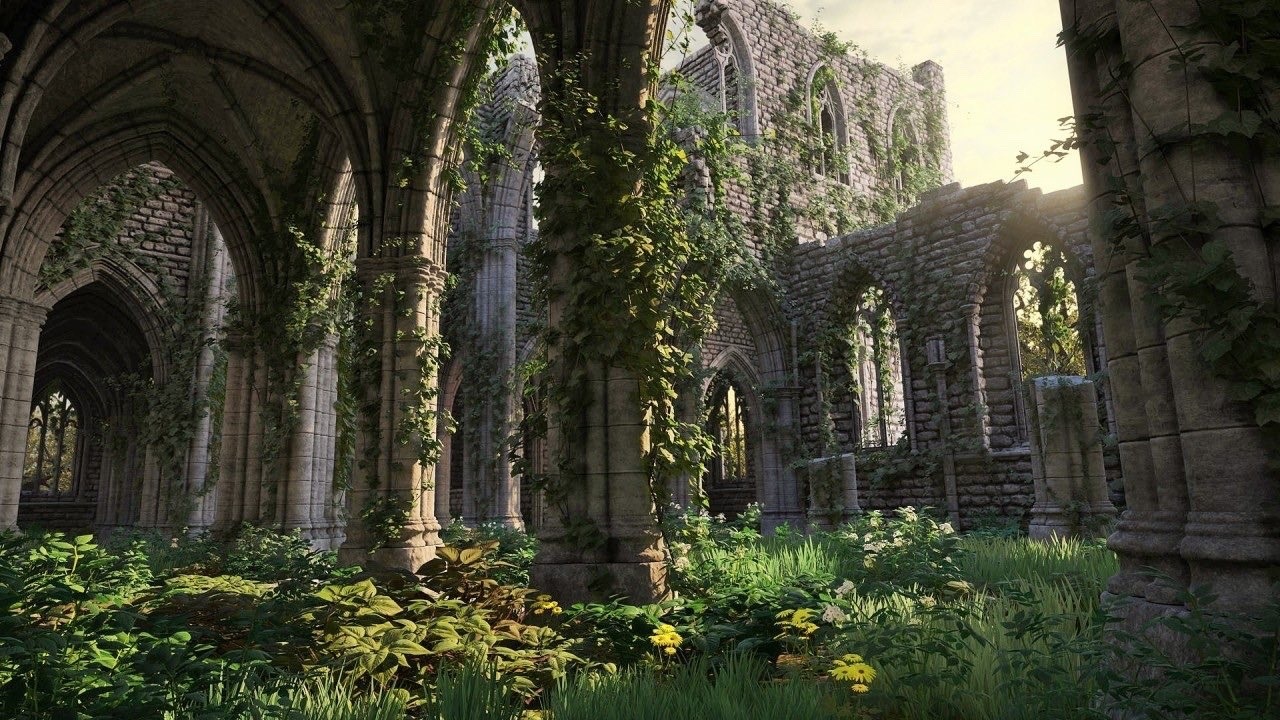
When they found it, it was not what they expected. It wasn’t a ruin. The high stone walls, though choked with ivy and wisteria, stood firm. The oaken doors, banded with iron, were slightly ajar, as if someone had just stepped inside.
“Incredible,” breathed Elias, the team’s documentarian, hefting his camera. “It’s a time capsule.”
But Aris, the survivalist and guide, placed a cautioning hand on the door. “No rot,” he muttered, running a thumb over the ancient wood. “No weathering. It shouldn’t be this sound.”
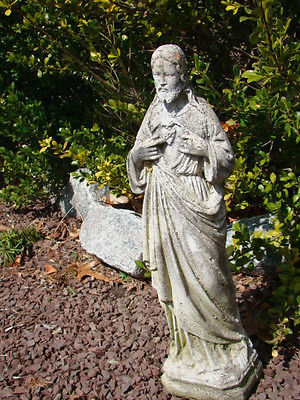
They pushed the creaking doors open and stepped into the cloister. The air was cold and still, carrying the scent of old stone and something else, a faint, coppery tang beneath the dust. The courtyard was a perfect square of overgrown herbs, now wild and thorny. In the center, a stone fountain was dry, its basin stained a dark, rusty brown. At one edge of the garden was a relatively clean area hosting a weathered statue of the Sacred Heart of Jesus.
Regina’s professional excitement began to curdle into unease. “Look at the carvings,” she said, her voice hushed.
The capitals of the columns surrounding the cloister were not adorned with typical saints or biblical scenes. The stone was intricately carved with writhing, tortured figures, their mouths open in silent screams, entangled with bestial shapes that seemed part-goat, part-man. The craftsmanship was exquisite, and all the more horrifying for it.
“Not very Benedictine,” Elias said, his camera’s light sweeping over a particularly grim scene of a crowned, demonic figure receiving a sacrifice.
The refectory held long tables, set with wooden bowls and pewter tankards, covered in a century of dust. But at the head table, one place was clear. A bowl contained a pile of desiccated, unidentifiable roots, and a knife lay beside it, its blade still bearing a faint, discolored film.
It was in the scriptorium that they found the first undeniable evidence. The shelves were empty, but a single massive folio lay open on a lectern. Its pages were not vellum but a strange, tight-stretched skin, written in a beautiful, illuminated Latin script. The text was a Benedictine Rule, but interspersed were passages of starkly different content—invocations to nameless entities, diagrams of celestial alignments, and complex instructions for rituals requiring “the vitae of the unwilling.”
“This isn’t a liturgy,” Regina whispered, her face pale. “It’s a grimoire.”
Aris pointed to the floor. “Drag marks.” Faint, parallel scuffs in the stone dust led from the lectern out into the hall.
The trail led them down a spiraling staircase, into the crypts below the abbey church. The air grew colder, the coppery smell stronger. Here, the cells were not for the dead, but for the living. Iron bars fronted small, dank chambers. In one, a set of manacles hung from the wall, their interiors dark and stained.
And then they heard it.
A low, rhythmic chanting. It was faint, echoing from the stone passages ahead, a dissonant harmony of deep, male voices. It was in Latin, but the words were wrong, twisted, a perversion of a sacred chant into something hungry and dark.
They exchanged terrified glances. The abbey was not abandoned.
Frozen, they listened. The chanting rose in pitch, culminating in a single, unified word that echoed down the corridor—a word that sounded like a key turning in a rusted lock of reality. Then, silence. A silence more terrifying than the sound.
It was broken by a soft, scraping noise from the cell behind them.
They turned. Elias’s camera light trembled as it illuminated the darkest corner. Something was hunched there, something that had once been a man. It was emaciated, clad in the rotten remnants of a black habit. Its head was too large, its skin stretched taut and covered in faint, spiraling scars that looked like writing. It raised its head, and its eyes were milk-white, seeing nothing and everything.
Its mouth opened, not to speak, but to emit a dry, rattling hiss. It was the sound of a throat that had not been used in a hundred years.
From the depths of the passage ahead, in the direction of the chanting, a new sound echoed towards them: the slow, deliberate, and unmistakable sound of footsteps. Many footsteps. Coming their way.
The thing in the cell began to rock back and forth, its hiss rising to a keening wail of either terror or recognition.
They were not the explorers anymore. They were the interlopers. And the residents of Sacred Heart of Jesus Abbey were finally coming to greet their guests.
*****
And, you know I mustn’t neglect the obligatory shameless self-promotion. New Yesterdays is available through the following links: Books-A-Million, Barnes & Noble, and Amazon as well as your favorite bookshops. The Audiobook is available from Libro.fm, as well as Amazon.



This is a fascinating story, Jim, captivating for me.
LikeLiked by 1 person
Thanks, Tim. This one was fun to write.
LikeLiked by 1 person