
Every house holds its memories. But when the voices fade and the doors stay shut, the silence that settles in can be more haunting than any ghost.
***
At the end of the crooked lane, where the trees huddled together like conspirators, the house stood waiting. Its bones were broken timber, its skin was peeling paint, and its eyes—those dark, hollow windows—stared out with the grief of centuries. It did not live, not in the way men do, yet it suffered, which is perhaps worse.
Once, long ago, warmth had filled it. Fires licked bright in the hearth, shadows of children darted across the walls, and the stairs rang with the ceaseless thrum of footsteps. There had been music here—laughter like bells, voices weaving together in argument and song. The house drank it all in, brick and board trembling with delight.
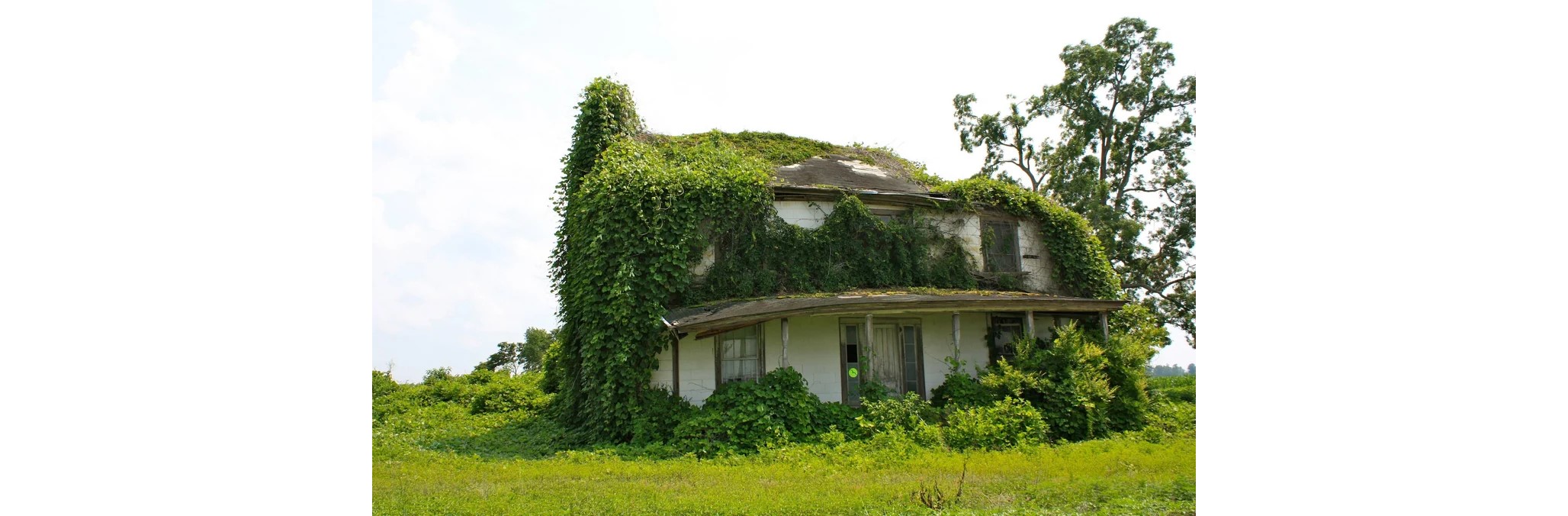
But the years turned cruel. One by one, the voices left. The laughter thinned into silence. The last door closed, and no one returned. The lilacs in the yard bloomed to emptiness, throwing their fragrance against locked windows. The rain whispered through broken shingles, staining the ceilings with long, spreading shadows. In time, the house learned that silence can scream louder than any joy.
It tried to hold on. It remembered. Each night, as the wind crept through its ribs, the house replayed what had been: a mother’s low lullaby, a father’s chair creaking, the soft press of a child’s hand on the banister. Sometimes, when the moon was high, faint sounds stirred within—the drag of phantom footsteps, a chair rocking with no weight upon it. To passersby, it was only wind and rot. But the house knew better. It was not empty. It was haunted by itself.
The years grew heavy. Kudzu wrapped itself tightly about the walls, as though trying to strangle the last breath from them. The porch sagged, the shutters flapped like broken wings, and the air inside thickened with dust—yet beneath the dust lingered the taste of long-vanished lives, as sharp and sweet as blood on the tongue.
And then, one winter evening, a pane of glass surrendered. It cracked with a shriek and fell inward, scattering shards like frozen tears. The house shuddered through its beams, a soundless sob, and seemed to fold deeper into the shadows of the trees.
No one came to see. No one heard.
And so, the house kept its vigil, trembling with memories, aching with the weight of what it had lost. Abandoned, unloved, it lingered on—not quite alive, not quite dead—like a soul that had been forgotten by God.
*****
Some homes do not die; they linger in silence, carrying the weight of every voice they once sheltered. And in their stillness, they remind us that forgetting is the cruellest fate of all. Have you ever known a place that seemed to remember its people long after they’d gone? I’d love to hear your memories.
*****
And, you know I would never leave you while neglecting the obligatory shameless self-promotion. New Yesterdays is available through the following links: Books-A-Million, Barnes & Noble, and Amazon as well as your favorite bookshops. The Audiobook is available from Libro.fm, as well as Amazon.



 olbigjim
A thoughtful story, Jim. I have not known such a house but you certainly made me think about abandoned houses in a new way
LikeLiked by 1 person
Thanks for coming by today, John. Roundabout where I grew up there were several abandoned houses. We, as kids, took great joy from exploring them. I reckon their stories stayed with me.
LikeLiked by 1 person
Sounds like great adventures, Jim. 😀
LikeLiked by 1 person