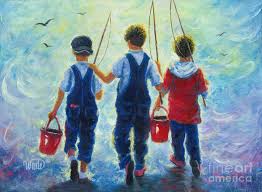
The river was the color of old pennies, and it belonged to Robert. He was the oldest, thirteen that summer, with shoulders starting to broaden and a voice that cracked like ice on a pond. He stood in the hip-deep current, his fly rod a graceful, slicing line against the sky. He was their father’s son, already mastering the old man’s silent, precise language of water and wind.
On the bank, in the dappled shade of a willow, sat Billy Joe. At ten, he was all angles and nerve, a collection of elbows and knees. He wasn’t allowed to wade yet, deemed too slight for the current’s pull. His fishing was a simpler, more desperate affair: a worm suspended from a bobber, his whole body tense, willing the red and white plastic to plunge beneath the surface. He watched Robert with a reverence that was close to pain.
And Mark, at eight, was the intermediary, the scribe. He sat on a mossy stone, not fishing, just watching. He was the keeper of the unspoken rules: you didn’t splash upstream of Robert, you didn’t complain about the gnats, and you never, ever touched Robert’s split-cane rod, which lay beside him in its silken case like a holy relic.
“He’s not even trying for trout,” Billy Joe whispered, his eyes fixed on his own motionless bobber. “He’s casting to the shadows under the far bank. For smallmouth.”
Mark nodded, though he didn’t fully understand the distinction. For Mark, the magic wasn’t in the catch, but in the ritual. The smell of citronella and river mud, the weight of the heat, the way Robert’s line unfurled in a perfect, whispered loop. It was a world entire, and they were inside it.
Their father was a ghost in the story of that day, present only in the wicker creel and the way Robert held his shoulders—stiff, braced for disappointment. He was a man who believed in doing things the right way, which was his way. Robert had learned the lesson early: excellence was a form of armor. Billy Joe, with his trembling intensity, kept failing to buckle his.
“Mark,” Robert commanded from the water, not turning around. “The net.”
Mark scrambled up, his heart thudding. This was a summons. He wrestled the long-handled net from where it was hooked to a tree and waded in, the cold water a shock through his shorts. The smallmouth, a bronze flash of pure muscle, fought at the end of Robert’s line. Mark slid the net beneath it, his small hands clumsy on the handle.
Robert knelt in the water, his fingers deft as he worked the hook free. He held the fish for a moment, its gills pulsing, its side gleaming in the sun. He looked not at Mark, but at Billy Joe on the bank. Then, with a flick of his wrist, he released it back into the penny-colored water.
Billy Joe gasped, a short, hurt sound. “Why’d you do that?”
Robert stood, wiping his hands on his waders. “You don’t keep what you can’t appreciate, Billy Joe.”
The words hung in the air, heavier than the heat. They weren’t about the fish. They were about the unbridgeable gap between them, between the boy in the water and the boy on the bank, between the heir and the spare.
Later, when the sun was low and the mosquitoes rose in clouds, Robert packed the rod away. “Let’s go.”
But Billy Joe was gone. His own rod lay abandoned on the grass, the worm drowned, the bobber still.
They found him a hundred yards downstream, sitting on a fallen log, his shoulders shaking with silent sobs. The world felt suddenly fragile. Robert stopped, his fisherman’s confidence gone. He looked at Mark, a silent plea in his eyes.
Mark walked over and sat beside Billy Joe. He didn’t put an arm around him. Their family didn’t go in for that. Instead, he picked up a stick and started drawing in the soft mud at their feet. A fish. Then another. A crude rendering of the willow tree.
After a moment, Robert came and stood over them. He didn’t apologize. Apologies were for concrete transgressions, not for the slow, tectonic shifts of childhood. He just stood there, a tall silhouette against the dying light.
“Your cast was good today, Billy Joe,” he said, his voice low. “You kept your slack right.”
Billy Joe’s sobs quieted. He didn’t look up.
Robert nudged Mark’s drawing with the toe of his wader. “Needs a better tail,” he grunted, but he didn’t walk away.
Mark kept drawing, adding scales to the fish, leaves to the tree. Robert stayed, a silent sentinel. Billy Joe’s breathing evened out. The three of them existed in that moment, a temporary constellation on the riverbank—the master, the scribe, and the heartbroken boy. The river, indifferent, flowed on, carrying away the day, the words, and the small, released fish, weaving them all into the dark, moving history of the land. They would never be this young again, never this precisely arranged in their pain and their loyalty. But for now, in the gathering dusk, they were together. It was all they knew how to be.
*****
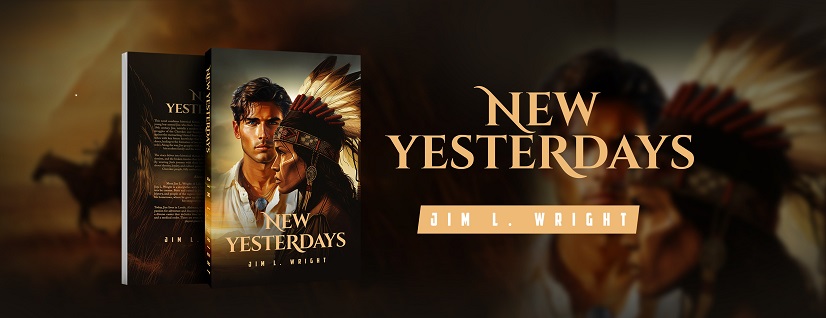
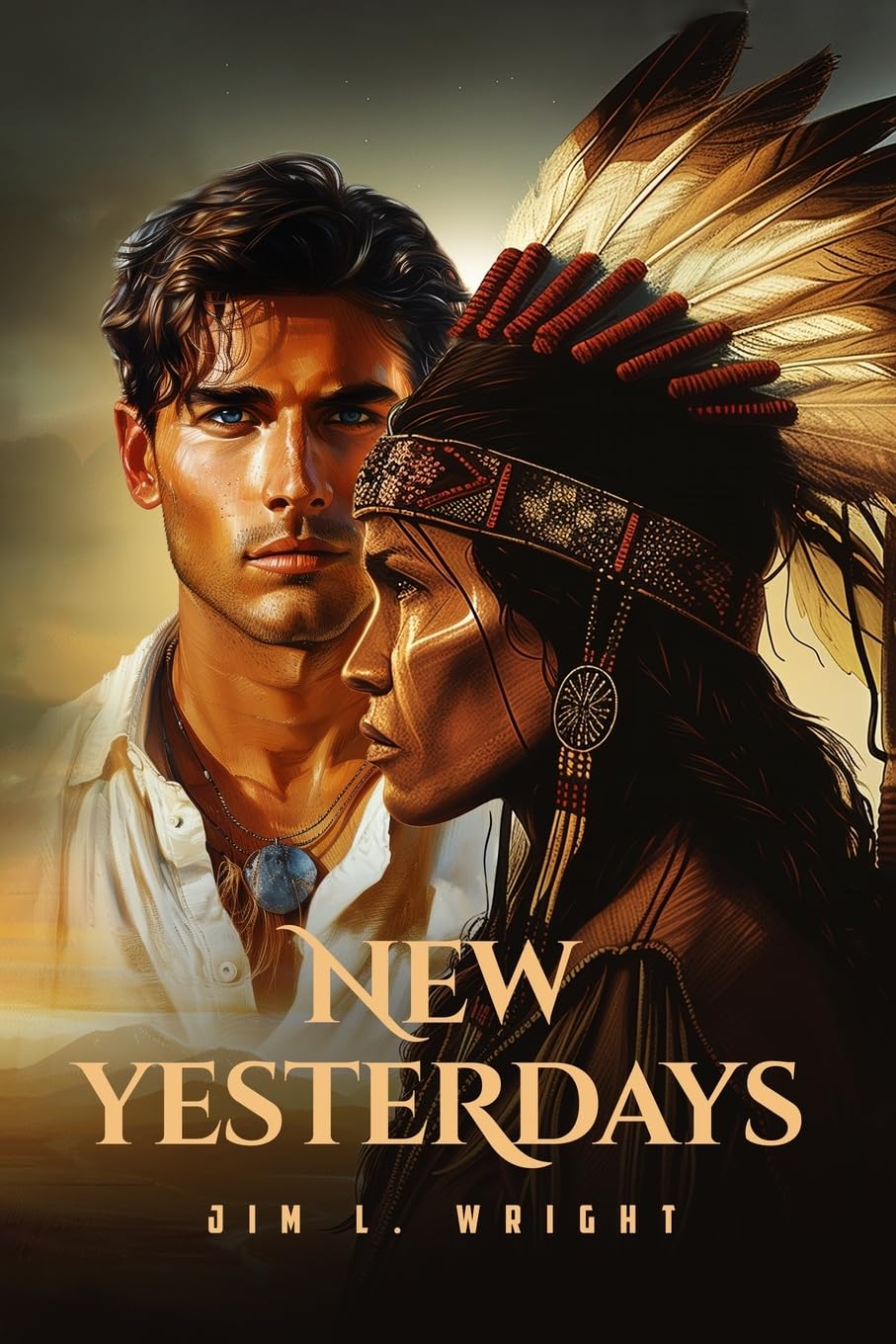
And, you know I couldn’t possibly neglect the obligatory shameless self-promotion. New Yesterdays, a very nice stocking stuffer, is available through the following links: Books-A-Million, Barnes & Noble, and Amazon as well as your favorite bookshops. The Audiobook is available from Libro.fm, as well as Amazon.


 olbigjim
Fascinating story, Jim.
LikeLiked by 1 person
Thanks, Tim. I wrote this with my two wee brothers in mind. Many happy memories!
LikeLiked by 1 person