The heat in the parlor of Eighty Oaks wasn’t just a weather condition; it was a character in its own right, a heavy, sodden blanket of humidity that had been draped over the story by That One Upstairs—the one who typed their misery. Inez, her spine straight and rigid as a preacher’s judgment, fanned herself with a copy of yesterday’s doom-laden prose.
“He’s getting lazy,” she announced to the room, her voice the sound of dry ice cracking. “The same heat. The same buzzing fly. I swear, if he describes the magnolia blossoms as ‘waxy and decayed’ one more time, I shall simply refuse to read my line.”
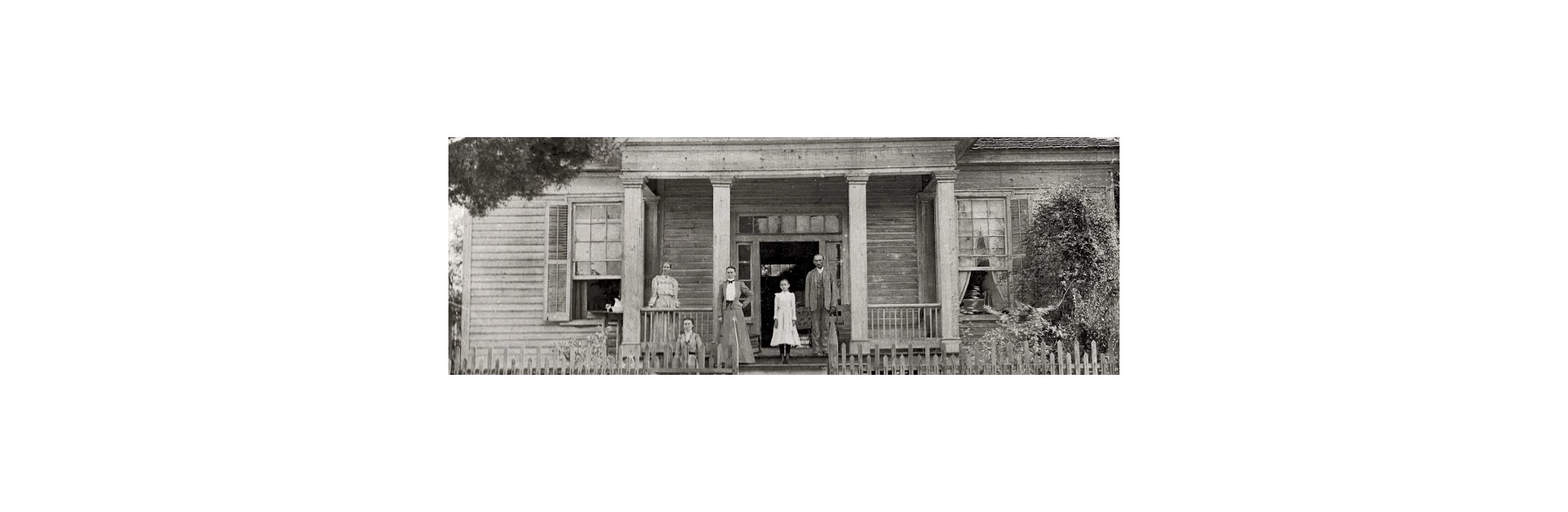
Her brother, Jasper, looked up from the glass of amber liquid he wasn’t technically drinking. “Hush, Inez. You’ll summon him. And you know what happens when we summon him.”
“What? Another tragic backstory?” This from Uncle Ernest, who was mostly comprised of beard and suspenders. “My tragic backstory is so convoluted even I can’t remember it. Something about a lost gold mine and a vengeful parrot. It’s hackwork.”
They were, all of them, painfully aware of their predicament. They were characters in a Southern Gothic tale, trapped in a narrative loop of decay, secrets, and inevitable doom. Their author, a fella they referred to as “The Scribbler,” had a fondness for atmosphere over plot and a thesaurus that was heavy on the words “sepulchral” and “miasma.”
The front door creaked open—a sound The Scribbler had written with such relish it now happened twice for effect. In stumbled Beau, the handsome-but-damned drifter, right on cue. He looked weary, not from the road, but from existential fatigue.
“Evening,” Beau said, dropping his threadbare knapsack. “I’m here to uncover the dark secret that haunts this family and probably die in the third act.”
“Welcome, son,” Ernest grumbled. “The secret’s in the attic. It’s a ledger proving our great-granddaddy swindled the whole county. It’s also where The Scribbler stores his more cumbersome metaphors.”
Beau sighed, running a hand through his hair. “Well, of course it is. And I suppose I’m destined to fall in love with you,” he said, looking at Inez, “in a tense, emotionally stunted way that will never be consummated because tragedy is more ‘aesthetic’.”
Inez snapped her fan shut. “Naturally. And I will be forced to choose between my duty to this rotting house and my flicker of passion for you, before you are inevitably killed by a ghost, or swamp gas, or perhaps a poorly constructed sentence.”
Their nightly ritual continued, a script they followed with the grim resignation of chain-gang prisoners. They discussed the “blight upon the land,” which Jasper pointed out was clearly a symbol for the family’s moral corruption. They heard the “mournful wail of the train whistle,” which Uncle Ernest noted was just the 8:15 to Memphis and happened every night.
The breaking point came when Inez found a new line of dialogue on the mantelpiece, typed on a ghostly slip of paper.
INEZ: (Her eyes, dark as buried secrets) The past is never dead. It’s not even past.
She read it aloud, her voice flat with contempt. “He’s quoting Faulkner at us now. That’s it. That’s the final straw.”
She crumpled the paper. “We’re on strike.”
A collective shock, warmer than the miasmic air, filled the room.
“Strike?” Jasper echoed. “We can’t strike. We’re fiction. Our only purpose is to be acted upon.”
“Precisely,” Inez said, a dangerous glint in her eye. “What if we refuse to be acted upon? What if we simply… do nothing?”
The next “chapter” was a disaster. The Scribbler tried to introduce a mysterious stranger—a one-eyed preacher with a snake. Beau, instead of engaging him in a portentous conversation about sin, asked if he’d like a glass of sweet tea and complained about the humidity. The preacher, whose name was apparently Brother Scofield, looked confused and left early.
The Scribbler attempted a spectral apparition in the garden. The family, as one, pointed out that the “ghost” was just a sheet caught on the rose trellis, and Jasper went out to fetch it for the laundry.
Frustrated, the narrative began to break down. The prose grew purple, then violent. The sky outside the parlor window churned with “onyx clouds of impending wrath.”
“Here it comes,” Ernest muttered. “The climactic storm. He’s pulling out all the stops.”
Lightning flashed, but it was a cheap, theatrical sort of lightning. Thunder rolled, sounding suspiciously like a drum being kicked in the attic.
Inez walked to the window, looked up at the roiling, descriptive sky, and spoke not to her family, but to the ceiling, to the very pages that bound them.
“Enough,” she said, her voice cutting through the manufactured thunder. “You can’t frighten us. We know we’re just words. And words can be rewritten. Or, better yet, left unwritten.”
The house fell silent. The storm ceased mid-rumble. The oppressive heat lifted, leaving behind the bland, neutral temperature of a blank page.
They had done it. They had bored their own author into submission.
For a long moment, they simply existed in the quiet. There was no plot, no symbolism, no decay. It was terrifying.
Beau turned to Inez. “So… without a narrative, what do we do now?”
Inez looked around the parlor, at her family, at the man she was supposed to tragically love. A slow, genuine smile, the first unscripted one in her existence, touched her lips.
“Whatever we want,” she said. “It’ll probably be terribly mundane. And it will be glorious.”
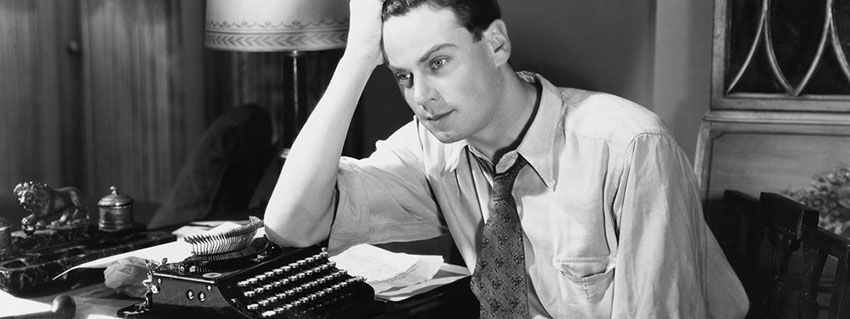
And in the vast, silent void beyond the story, a single, frustrated tap of a typewriter was heard, followed by the sound of a writer leaning forward in his chair, utterly and completely stumped.
*****
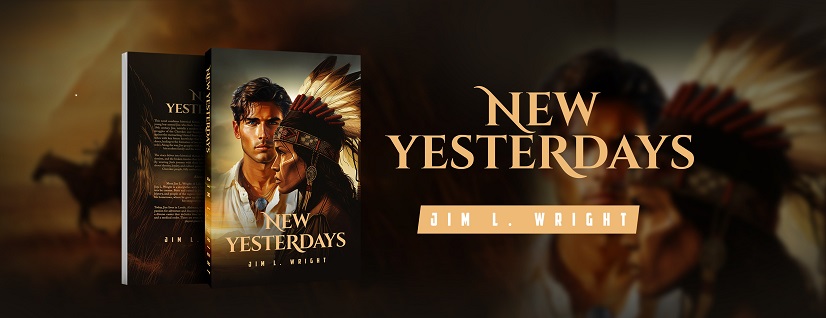
And, you know I’m not about to neglect the obligatory shameless self-promotion. New Yesterdays, a very nice Christmas stocking stuffer, is available through the following links: Books-A-Million, Barnes & Noble, and Amazon as well as your favorite bookshops. The Audiobook is available from Libro.fm, as well as Amazon.


 olbigjim
I so enjoyed this, Jim.I wanted to add some hyperbole but was stopped mid thought at the genius of your piece.
LikeLiked by 1 person
Thanks so much, John!
LikeLiked by 1 person
😊
LikeLiked by 1 person
This is a fascinating story, Jim!
LikeLiked by 1 person
My characters always disrespect me, Tim!
LikeLiked by 1 person