A Piedmont Porchlight Story
By Jim L Wright
The first indication that Delbert “Dink” Rhinehart’s past had finally caught up with him arrived on a Tuesday afternoon in the form of a battered ol’ green 1973 Chevrolet, a gentleman wearing a purple fedora, and a trumpet case that appeared to be held together with electrical tape, stubbornness, and the grace of Almighty God.
Ruby Rhinehart was standing at the kitchen sink when the automobile pulled up in front of the house.
She watched an elderly black gentleman unfold himself from behind the steering wheel, straighten his hat, and retrieve the trumpet case from the back seat. He stood beside the car for a moment, looking at the house as though he were trying to decide whether he’d found the right place.
Then he smiled.
Ruby didn’t particularly care for that smile.
Not because it was unfriendly. Quite the contrary. It was the smile of a man who knew something she didn’t, and Ruby had been married to Delbert Rhinehart just long enough to develop a healthy suspicion of people who knew things she didn’t.
“Dink!” she called.
No answer.
“DELBERT RHINEHART!”
From somewhere toward the back of the house came a crash, followed by a word Ruby was reasonably certain had never appeared in the King James Bible.
“What?”
“There’s a man out front with a trumpet!”
“A what?”
“A trumpet, Dink! One of them brass contraptions you blow into and aggravate the neighbors with!”
Dink appeared in the kitchen doorway, carrying a screwdriver and wearing an expression suggesting he’d recently lost an argument with a plumbing fixture.
“What’s he want?”
“How in the name of all that’s holy would I know? He ain’t introduced hisself through the kitchen window!”
By then, the stranger was making his way up the front walk.
Ruby went to answer the door, with Dink following close behind.
The gentleman removed his purple fedora.
“Afternoon, ma’am. I’m lookin’ for a Delbert Rhinehart.”
Ruby folded her arms.
“You found him. Depends on what you want him for.”
The stranger looked past her.
“Dink?”
Dink stared.
For a moment, he looked like a man who’d opened his front door and discovered the ghost of Christmas Past standing on his porch with a musical instrument.
“Well, I’ll be damned,” he whispered.
The stranger’s smile widened.
“Been a long time, ain’t it?”
“Isaiah?”
“Professor Isaiah Baptiste, if we’re bein’ formal. But I reckon Isaiah’ll do.”
Dink stepped forward and wrapped his arms around the old musician.
“Isaiah Baptiste! Good Lord Almighty! Where in the world did you come from?”
“N’Awlins, same as always.”
“Well, come on in this house!”
Ruby stepped aside, though not enthusiastically. She’d already discovered that her husband’s forty-six years in Louisiana contained enough untold stories to keep the Piedmont gossip mill operating until the Second Coming.
And here was another one, wearing a purple hat.
Isaiah set his trumpet case carefully beside the sofa.
Ruby eyed it.
“Would you care for some coffee, Mr. Baptiste?”
“Much obliged, ma’am. Black, if you please.”
“Sugar?”
“No, ma’am. Life’s sweet enough.”
Ruby gave him a suspicious look. Men who said things like that usually wanted something.
She disappeared into the kitchen.
Dink and Isaiah settled into the living room, where Napoleon, Ruby’s substantial orange cat, occupied the best chair with the air of a monarch who’d recently conquered a neighboring country.
Isaiah studied the animal.
“That’s a mighty large cat.”
“That’s Napoleon,” Dink said.
“Named after the emperor?”
“Acts like him, too.”
Napoleon opened one eye, considered the visitor, and closed it again. He’d conquered enough territory for one afternoon.
Isaiah chuckled.
“Dink, I swear, you ain’t changed one bit.”
“That’s because you ain’t seen me try to get out of bed in the mornin’.”
Ruby returned with the coffee.
Isaiah accepted his cup, took a sip, and looked at Dink for a long moment.
“I’ve been lookin’ for you, old friend.”
Dink grinned.
“Well, you found me!”
“Yes, sir. And I come all this way because there’s a debt between us that’s been waitin’ forty-six years to be settled.”
Ruby stopped halfway to her chair.
“A debt?”
Isaiah nodded.
“A mighty big one, ma’am.”
Ruby turned slowly toward her husband.
“Delbert Rhinehart, what have you done?”
“Ruby, honey, I don’t know what he’s talkin’ about.”
“Don’t you honey me! We ain’t been married long enough for you to start bringin’ creditors home from Louisiana!”
Isaiah opened his mouth.
Ruby held up one finger.
“And before anybody says another blessed word, let me make somethin’ perfectly clear.”
She drew herself up to her full height.
“This ain’t the Bank of England!”
Napoleon gave an indignant meow from his chair.
Isaiah Baptiste began to laugh.

Not a polite chuckle, either. A great, rolling laugh that shook his shoulders and brought tears to his eyes.
Dink joined him.
Ruby did not.
“I’m glad somebody finds this amusing.”
Isaiah finally caught his breath.
“Ma’am, I ain’t here to collect money.”
Ruby narrowed her eyes.
“Then what kind of debt are we talkin’ about?”
The old musician looked at Dink.
And for the first time since he’d stepped onto the porch, his smile faded.
“Somethin’ your husband did for me a long time ago,” he said quietly. “Somethin’ I never got the chance to properly thank him for.”
Dink frowned.
“Isaiah, I don’t remember doin’ anything special.”
The old man nodded.
“I know you don’t.”
He glanced toward the battered trumpet case.
“That’s why I come.”
Ruby sat down.
For once, she decided to listen.
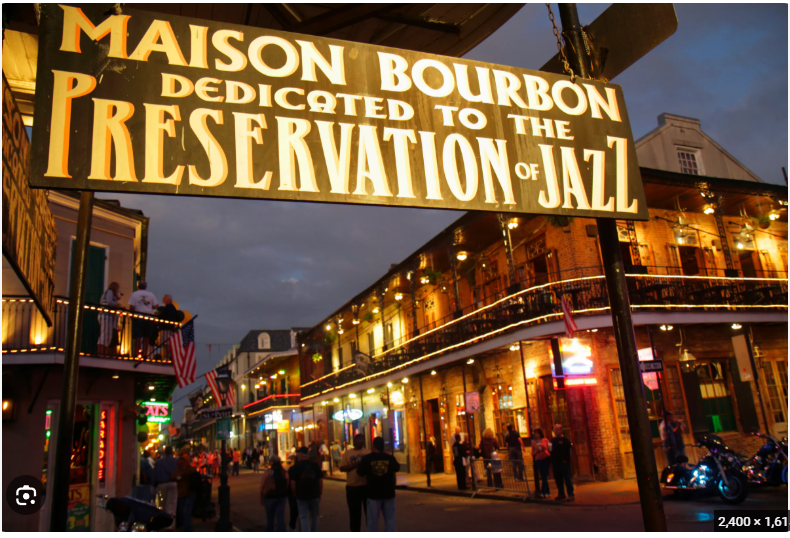
Forty-six years earlier, Isaiah Baptiste had been a trumpet player on Bourbon Street, making his living wherever somebody needed a horn and had enough money to pay for one.
He was good.
Not famous, mind you. New Orleans had enough good trumpet players to fill a riverboat, and half of them could play circles around a fellow before he’d finished tuning his instrument.
But Isaiah had something the others didn’t.
He could make a trumpet sound like it was remembering somebody.
He played at weddings and funerals, birthday parties and fish fries, and most evenings at a little bar called Ruby Red, owned by a young Alabama fellow everybody called Dink.
Ruby Red wasn’t much to look at in those days.
The ceiling leaked when it rained, the air conditioner worked when it felt like it, and the men’s room door had to be lifted an inch before it would close.
But Dink kept the place clean, paid his musicians when he could, and had a peculiar habit of feeding anybody who looked hungry, whether they had money or not.
Isaiah had a wife named Celeste and a little daughter named Marie.
Celeste died when Marie was six.
It was a sudden illness, the sort that takes a person before anybody has time to understand what’s happening.
Isaiah was left with a child, a trumpet, and a stack of bills that seemed to multiply every time he turned his back.
He did what men have always done when life hands them more trouble than they can carry.
He kept going.
He played his trumpet at night, took whatever work he could find during the day, and learned to braid his daughter’s hair with fingers better suited to pressing valves than handling ribbons.
Marie was the light of his life.
She had her mother’s eyes, her father’s stubbornness, and a laugh that could make a room feel warmer.
She also loved music.
Isaiah taught her to find middle C on an old upright piano somebody had abandoned in a boardinghouse. By the time she was eight, she could pick out melodies by ear.
“She gonna be better than me someday,” Isaiah used to tell Dink.
Dink would grin.
“Won’t take much, Professor.”
“Boy, I’ll put this trumpet where the sun don’t shine.”
“Not while you’re on my payroll, you won’t.”
They’d laugh, and the evening would go on.
Then, one winter, Marie got sick.
At first, it seemed like an ordinary childhood illness. A fever, a cough, a little trouble breathing.
But the fever wouldn’t break.
And the cough got worse.
Isaiah took her to a doctor, who told him she needed hospital care.
The hospital wanted money Isaiah didn’t have, and the bills from Celeste’s illness were still sitting in a drawer at home.
He tried borrowing.
He tried selling his watch.
He even considered selling his trumpet.
That was the worst part.
The trumpet had belonged to his father.
It was the one thing he owned that connected him to the man who’d taught him how to play, and the thought of parting with it nearly broke him.
But Marie was his daughter.
A trumpet was only brass.
He brought it to Ruby Red one evening, laid the case on the bar, and asked Dink whether he knew anybody who might buy it.
Dink opened the case.
He knew that horn.
He’d heard it sing a thousand nights.
“What you want to sell this for?”
“Need the money.”
“For what?”
Isaiah looked away.
“Marie.”
Dink closed the case.
“How bad?”
Isaiah told him.
Dink listened without interrupting.
Then he pushed the trumpet case back across the bar.
“Go on home, Isaiah.”
“I can’t. I need to sell it.”
“Take your horn and go home.”
“Dink, you don’t understand.”
“I understand plenty.”
Dink reached beneath the bar, took out an envelope, and wrote something on the front.
Then he handed it to Isaiah.
“Take this over to the hospital. Ask for Mrs. Landry in the business office. She’ll know what to do.”
Isaiah looked at the envelope.
“What is it?”
“Somethin’ I worked out.”
“How much I owe you?”
“Not a damn thing. Now go see about your little girl.”
Isaiah tried to argue.
Dink pointed toward the door.
“Professor, I pay you to blow that trumpet, not stand here aggravatin’ me. Go on.”
So, Isaiah went.
And when he arrived at the hospital, Mrs. Landry opened the envelope, read the note, and told him the arrangements had been made.
Marie was admitted.
The doctors treated her.
The fever eventually broke.
And a little girl who’d been frighteningly close to dying came home to her father.
Isaiah never knew exactly how much Dink paid.
He suspected it was more than the young bar owner could afford.
What he didn’t know was that Dink had taken the money he’d been saving to repair Ruby Red’s roof, borrowed a little more from a friend, and spent the better part of the following spring catching rainwater in buckets behind the bar.
When the musicians complained about the leaks, Dink told them the building was developing character.
He never mentioned Marie.
Not once.
Ruby had stopped worrying about the Bank of England.
She sat very still, her coffee forgotten on the table.
Dink was staring at Isaiah.
“Lord, Professor. I’d forgotten all about that.”
Isaiah nodded.
“I figured you had.”
“How’s Marie?”
The old musician smiled.
“She’s fine, Dink. She’s fifty-four years old now, if you can believe that.”
Dink blinked.
“Fifty-four?”
“Fifty-four. Got a husband, two children, and three grandchildren. Taught music in the New Orleans schools for thirty-two years before she retired.”
“Well, I’ll be damned.”
“She’s got your kind of heart, too. Always takin’ on students whose folks can’t afford lessons. Says music ought not belong just to people with money.”
Dink smiled.
“Sounds like a fine woman.”
“She is.”
Isaiah reached into his coat pocket and took out a photograph.
It showed a silver-haired woman seated at a piano, surrounded by children and grandchildren.
Dink studied it.
“That’s little Marie?”
“That’s her.”
“Well, ain’t that somethin’.”
He handed the photograph to Ruby.
She looked at it for a long time.
Then she looked at her husband.
There was something in her expression Dink couldn’t quite read.
He’d seen Ruby angry, amused, exasperated, and once so thoroughly disgusted with Napoleon that she’d threatened to send him to live with the Methodists.
But he’d never seen her look at him quite like that.
Isaiah reached for his trumpet case.
“Now, Dink, there’s somethin’ else.”
He opened the latches.
Inside lay an old silver trumpet, its finish worn thin in places, the bell carrying a small dent near the rim.
It was plainly an instrument that had seen more of life than most people.
Dink leaned forward.
“Is that the same horn?”
“Same one.”
“Lord, I thought that thing would’ve worn out by now.”
“Me too.”
Isaiah lifted it carefully.
“Marie wanted me to bring this. She couldn’t come herself. Her husband ain’t been well, and she didn’t want to leave him. But she sent somethin’ along.”
He took a small recording player from his bag and set it on the coffee table.
Ruby eyed the device.
“What’s that?”
“Music, ma’am.”
“Well, I figgered it wasn’t no waffle iron.”
Isaiah chuckled.
“Marie wrote a piece a few years back. She and her daughter recorded it together. Piano and violin.”
He looked at Dink.
“She wrote it for you.”
Dink stared.
“For me?”
“Yes, sir.”
“Why?”
Isaiah gave him a long, patient look.
“Dink, I believe we’ve been discussin’ that very thing for the last half hour.”
Dink rubbed the back of his neck.
“Well, hell.”
Isaiah smiled.
“That’s about what I figured you’d say.”
He pressed a button.
Soft piano notes filled the living room.
They were gentle at first, almost hesitant, like somebody standing at a door and wondering whether to knock.
Then a violin joined them.
The melody grew, not louder exactly, but fuller, warmer, carrying something that sounded a little like sorrow and a little like gratitude.
Isaiah raised the trumpet to his lips.
And the old horn began to sing.
Ruby had never heard anything quite like it.
She’d heard church choirs, gospel quartets, fiddles at family gatherings, and the occasional high-school band that sounded as though somebody had turned a sack of cats loose in the instrument room.
But this was different.
The trumpet didn’t seem to be playing over the piano and violin.
It was talking to them.
Sometimes it answered.
Sometimes it remembered.
And sometimes it simply held one long, trembling note, as though the old musician had found something he’d been trying to say for forty-six years and was afraid to let it go.
Dink sat with his hands folded between his knees.
He didn’t move.
Ruby watched him.
She saw the young man he’d once been, the one who’d left Piedmont and gone off to New Orleans, the one she’d waited forty-six years to marry.
She’d wondered sometimes what those years had made of him.
Now she knew a little more.
The music went on.
Napoleon, who ordinarily regarded all musical performances as personal insults, climbed down from his chair and settled on the rug near Isaiah’s feet.
For once, he made no complaint.
When the final note faded, Isaiah lowered the trumpet.
Nobody spoke.
The room seemed unwilling to surrender the silence.
Finally, Dink cleared his throat.
“Isaiah, that was forty-six years ago.”
“I know.”
“Hell, I barely remember it.”
Isaiah looked at him for a long moment.
“That’s because you were the one givin’, Dink. I was the one receivin’.”
Dink looked down at his hands.
“I just wanted that little girl to get well.”
“She did.”
Isaiah glanced at the photograph on the table.
“And she grew up. Had children. They had children. She taught thousands of young people how to make music, and some of them are teachin’ others now.”
He paused.
“You helped give her all those years, Dink.”
Dink shook his head.
“Professor, I didn’t do all that.”
“No,” Isaiah said softly. “You didn’t.”
He smiled.
“You just opened the door.”
Ruby reached across the sofa and took her husband’s hand.
Dink looked at her.
She squeezed his fingers.
And for once, Delbert Rhinehart, who could talk the hind leg off a mule when properly encouraged, couldn’t think of a single thing to say.
Isaiah stayed for supper.
Ruby insisted.
There was fried chicken, butterbeans, cornbread, sliced tomatoes, and a peach cobbler she’d made that morning.
Isaiah ate like a man who’d driven a long way and found exactly what he was looking for.
Afterward, the three of them sat on the front porch, watching the evening settle over Piedmont.
Isaiah told stories about the old days at Ruby Red.
Dink supplied corrections, most of which Isaiah ignored.
Ruby learned that her husband had once tried to break up a bar fight by threatening to sing.
“Did it work?” she asked.
“Cleared the whole place,” Isaiah said.
“Professor, you’re a liar.”
“Dink, I was there.”
Ruby laughed until she had to wipe her eyes.
Later, as the streetlights came on, Isaiah stood to leave.
Dink walked him to the Chevrolet.
“You sure you won’t stay the night? We got a spare bedroom.”
“Much obliged, but I promised Marie I’d be home tomorrow. She’s cookin’ supper.”
“Well, tell her I’d sure like to meet her someday.”
Isaiah smiled.
“You will.”
He placed the trumpet case on the back seat.
Then he turned and offered his hand.
Dink took it.
But Isaiah didn’t let go.
“For forty-six years,” the old musician said, “I’ve been tryin’ to figure out how to thank you.”
“Isaiah, you didn’t have to come all this way.”
“I know.”
“Could’ve just called.”
“I know that, too.”
“Then why’d you do it?”
Isaiah glanced toward the house, where Ruby stood in the doorway with Napoleon winding himself around her ankles.
“Because some things ought to be said face-to-face.”
Dink nodded.
Isaiah squeezed his hand.
“Thank you for my little girl.”
Dink swallowed.
“You’re welcome, Professor.”
The old musician climbed into his Chevrolet, started the engine, and rolled down the window.
“Oh, and Dink?”
“Yeah?”
“Marie named that piece of music The Kindness of a Stranger.”
Dink frowned.
“But I wasn’t a stranger.”
Isaiah smiled.
“No, sir. You surely weren’t.”
He tipped his purple fedora and drove away.
Dink stood in the driveway until the Chevrolet disappeared around the corner.
Then he went back inside.
Ruby was washing the supper dishes when Dink came into the kitchen.
He picked up a towel and began drying.
For a while, neither spoke.
Finally, Ruby set down a plate.
“Delbert?”
“Hmm?”
“You never told me about that little girl.”
Dink shrugged.
“Didn’t think about it.”
“You paid her hospital bills?”
“Some of ’em.”
“And let your bar roof leak?”
“Roof needed fixin’ anyway.”
Ruby studied him.
“Why didn’t you tell anybody?”
Dink looked genuinely puzzled.
“What was there to tell?”
Ruby opened her mouth.
Then she closed it.
She took the plate from his hands and put it away.
“Dink?”
“Yeah, honey?”
“You know what I said this afternoon, when I thought that man had come to collect money?”
Dink grinned.
“Somethin’ about the Bank of England?”
Ruby nodded.
“Well, I reckon I was right.”
“How’s that?”
She reached up and straightened his collar.
“Because there ain’t a bank in England, or anywhere else, that’s got enough money to pay for what you gave that little girl.”
Dink looked embarrassed.
“Aw, Ruby.”
She kissed him on the cheek.
“Don’t you aw-Ruby me, Delbert Rhinehart.”
From the living room came a tremendous crash.
Napoleon had apparently decided the evening had contained quite enough human sentiment and had knocked a lamp off the end table to restore the natural order of things.
Ruby closed her eyes.
“Lord, give me strength.”
Dink chuckled.
“Want me to go see what he broke?”
“No. You stay right here.”
She took his hand.
“Let that fool cat wait.”
And there in the kitchen, with the supper dishes still piled beside the sink, Ruby Rhinehart put her arms around the man she’d waited forty-six years to marry.
Outside, the evening grew quiet.
Somewhere far down the road, an old musician was headed home to a daughter who’d grown up, raised a family, and filled the world with music.
And in a little house in Piedmont, Alabama, a man stood holding his wife, still wondering what all the fuss had been about.
Because Dink Rhinehart had never considered himself a hero.
He’d just been a fellow with a leaky roof who couldn’t bear the thought of a little girl not getting well.
And sometimes, I reckon, that’s all a hero really is.
Somebody who does what needs doin’, then goes on about his business.
Not knowing that forty-six years later, the kindness he gave away without a second thought would come home to him.
Carryin’ a battered trumpet.
And wearin’ a purple damn hat to boot.
The End