An Uncle Toby McCarley Porch Story
Night Two: A Fool Idea
The next evening, there were more people on Uncle Toby’s porch. Not many more. Just enough more for folks to notice.
Two folding chairs had appeared beside the steps. A couple of teenagers lingered near the sidewalk pretending they weren’t interested.
Earl noticed immediately.
“They’re multiplyin’.”
Pearl glanced around.
“Who?”
“The listeners.”
“Tobe’s got a mystery.”
Beulah Mae snorted. “No. Tobe’s got a secret. Mysteries are accidental. Secrets are on purpose.” Uncle Toby emerged from the screen door carrying a fresh Mason jar of sweet tea. “That may be the smartest thing you’ve ever said, Beulah Mae.”
She beamed. Pearl looked offended. The old man settled into his peacock chair. The crowd quieted. Not entirely, just enough.
Earl wasted no time.
“How were folks accusin’ each other before the squirrel disappeared?”
Toby smiled.
“Because folks are talented.”
Several people laughed.
“Now where was I?”
“The football game.”
“The uniforms.”
“Clayton Reynolds.”
“That’s right.”
The old man took a sip.
“Well then.”
And once again Hughes Street drifted away.
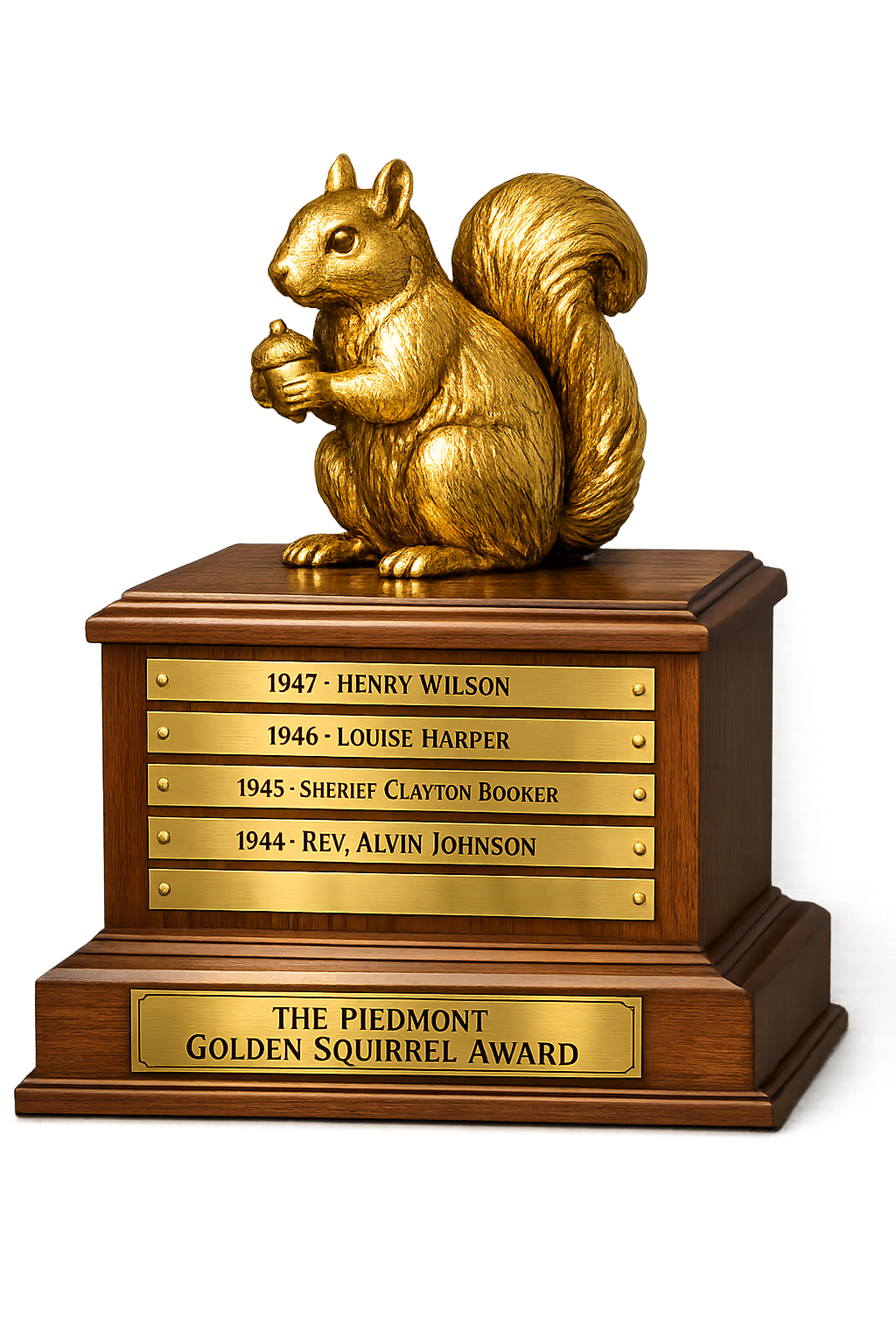
Saturday morning arrived bright and hot. Clayton Reynolds was standing outside Purdy’s Drug Store with a cup of coffee in one hand and a worried expression on his face. Across the street, three boys were throwing a football. One of them wore a Bulldogs jersey. The number had been patched twice. Maybe three times.
Clayton watched for a while. Then he crossed the street.
“Morning, boys.”
The football stopped moving immediately. When adults spoke, children in 1948 generally listened. Mostly because adults in 1948 had perfected the art of looking disappointed.
“Y’all excited about the season?”
“Yes, sir.”
Clayton nodded. Then he asked a question.
“How old are those uniforms?”
The boys looked at one another. Finally, one shrugged.
“My brother wore this one.”
“How much older is your brother?”
“Seven years.”
Clayton winced.
The boy added:
“Daddy says it used to belong to somebody else before him.”
Clayton looked toward the school and then back toward the boys. An idea began taking shape. Dangerous things, ideas. Particularly in small towns.
By lunchtime, Clayton was sitting in the barber chair at Curtis Pope’s shop. The place smelled of talcum powder, hair tonic, and opinions.
The opinions were free. Nobody ever left without one being formed or challenged.
“You know what those boys need?” Clayton asked.
Curtis never stopped cutting hair.
“Discipline?”
“Uniforms.”
“Oh.”
The barber considered that.
“That too.”
Within ten minutes, everybody in the shop was discussing football.
Within twenty minutes, they were discussing money.
Within thirty minutes, they were discussing whose responsibility it was to spend the money.
Which was considerably more entertaining. By supper time, Clayton had made up his mind. The next afternoon, he rented the meeting room above the hardware store.
Word spread quickly. Whenever somebody rents a meeting room, people assume one of three things.
Politics.
Religion.
Or trouble.
Piedmont enjoyed all three.
That evening, nearly thirty people squeezed into the room.
The mayor came.
The coach came.
The newspaper editor came.
The preacher came.
Half the business owners downtown came. A few folks came simply because they enjoyed meetings. Nobody has ever successfully explained people like that.
Clayton stood at the front. Cleared his throat and laid out his plan.
A community fundraiser.
Enough money to purchase brand-new football uniforms for every player. For a moment, the room was silent. Then heads began nodding. People smiled.
The coach looked relieved.
The mayor looked impressed.
The editor was already planning this week’s headline.
Everything seemed perfect. Until a voice from the back of the room said, “That’s the dumbest idea I’ve heard all year.”
Back on Hughes Street, the crowd leaned forward.
“Tobe!”
“Who said it?”
The old man stood carefully. Slowly. Deliberately. The exact same way he had the night before.
The crowd groaned.
“Oh, no.”
“You can’t be serious.”
Toby grinned.
“I absolutely can.”
Then he shuffled toward the screen door.
“And tomorrow night I’ll tell you who said it.”
The protests followed him inside.
Again.


Night 2? I’d better find Night 1. Cheers!
LikeLiked by 1 person
Yes’m I reckon you need to find Night 1 because there’s lots of information in these installments. I haven’t decided yet if y’all will be tested on it come August. LOL
LikeLike
Okay, I’m hooked.
LikeLiked by 1 person
Oh, John, I gotta say I’m pickled tink that you’re hooked! After all, you’re one of my targets when I start writing, and I don’t want to disappoint!
LikeLike
Never disappointed.
LikeLiked by 1 person
Fascinating story of Uncle Toby, Jim.
LikeLiked by 1 person
Thanks, Tim! Everybody in town loves ol’ Toby. He’s a municipal treasure.
LikeLiked by 1 person
😊
LikeLiked by 1 person