An Uncle Toby McCarley Porch Story
Night Ten: Election Day
By the tenth evening, somebody had started calling it The Porch Club. Nobody admitted responsibility. Everybody blamed Earl. Earl blamed the children. The children blamed Beulah Mae. Beulah Mae blamed modern society. No one knew what that meant. The crowd now occupied most of Uncle Toby’s front yard. A few late arrivals had taken to sitting on the grass. Somebody brought sweet tea. Somebody brought a pound cake. Somebody brought a notebook large enough to frighten people. The notebook belonged to Beulah Mae. Naturally.
Uncle Toby settled into the peacock chair. Surveyed the gathering. And nodded.
“Well.”
“What?” asked Pearl.
“We may need tickets.”
The crowd laughed. Earl leaned forward.
“Let’s vote.”
The old man blinked.
“For what?”
“The squirrel.”
“Toby, this happened seventy-eight years ago.”
“So?”
“The vote already happened.”
Earl thought about it. Then nodded.
“Fair point.”
The old man took a sip of tea. And the porch dissolved into memory.
* * *
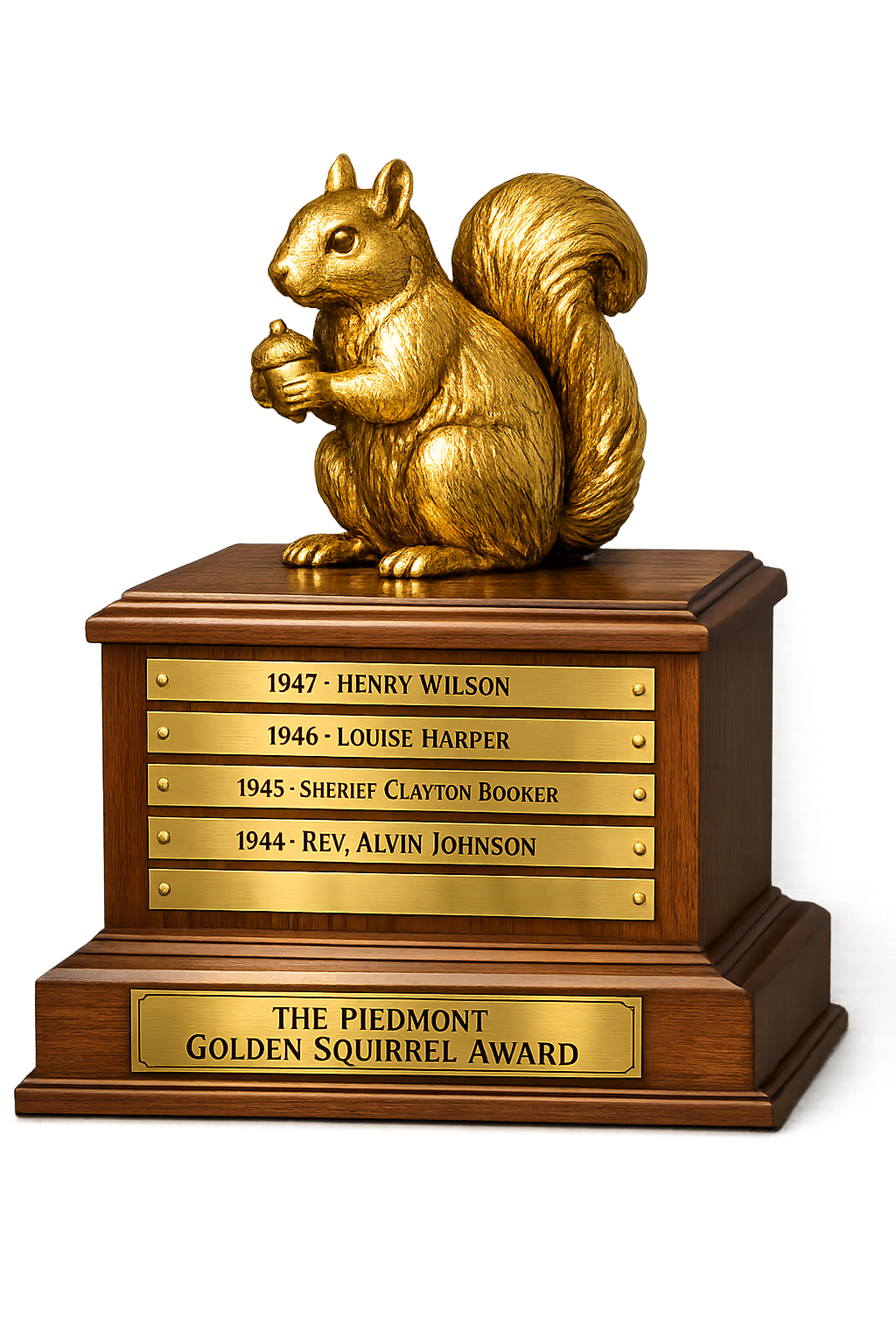
September, 1948. Election Day. The first vote for the first Golden Squirrel. The town buzzed. Not because the award mattered. At least not at first. The excitement came from the voting itself. Piedmont never needed much excuse to form an opinion. Now they’d been given ballots. It was like handing gasoline to a bonfire. The voting took place in the community room beside the courthouse. Folks lined up early. Very early. Some arrived before sunrise. One man arrived so early that the building wasn’t open yet.
He blamed the clock. Young Toby arrived with his father. Officially, he was there to observe. Unofficially, he was there to stick his nose into matters that didn’t concern him. A skill he was perfecting. Inside, volunteers distributed ballots. Names appeared neatly in alphabetical order. The mayor. The coach. The doctor. Clayton Reynolds. Several others. People studied the ballots as if taking an examination. Some discussed their choices openly. Others guarded their opinions like state secrets.
One elderly woman folded her ballot and tucked it inside her purse before voting. Nobody ever figured out why.
* * *
Back on Hughes Street, laughter broke out.
“That sounds familiar.”
Toby pointed toward Pearl.
“It ought to.”
Pearl suddenly became interested in her lemonade.
* * *
The voting continued all morning. Then all afternoon. Then into the evening. At six o’clock, the ballot box was sealed. The counting began. And every citizen in Piedmont suddenly developed an urgent need to be nearby. The room overflowed. The hallway overflowed. The sidewalk overflowed. Several people listened through open windows. One fellow brought binoculars. Nobody understood his strategy. Young Toby squeezed through the crowd. Slowly. Patiently. Like a squirrel working through a fence.
At the front of the room sat the counting committee. Mayor Pritchard. Coach Henderson. The preacher. Wilbur Crenshaw. And, somehow, Horace Blalock. Again. The counting commenced. Names were read aloud. Marks were recorded. Totals accumulated. The crowd held its breath. Clayton Reynolds remained near the back. Leaning against the wall. Quiet. Calm. Almost detached. Maybelline stood beside him. Small. Serious. Watching everything. Listening to everything. Remembering everything. Though nobody knew it yet.
Not even her. The first hundred ballots were counted. Then two hundred. Then three. The margin narrowed. Then widened. Then narrowed again. Every time Clayton’s name was announced, part of the crowd cheered. Every time another candidate’s name appeared, somebody else cheered. The atmosphere felt less like an election and more like a football game. Which, in Piedmont, amounted to the same thing.
* * *
Back on Hughes Street, Toby smiled.
“That was the exact moment I realized football had infected every aspect of local government.”
The crowd laughed. Even Sheriff Booker.
* * *
In 1948, the counting neared its end. Only a handful of ballots remained. The room had grown silent. The tension hung thick enough to spread on biscuits. Mayor Pritchard unfolded the next ballot. Looked down. Then looked up. A strange expression crossed his face. The crowd leaned forward. He unfolded another. And another. The expression remained. Young Toby noticed. So did Wilbur. So did Horace. So did Clayton. Something wasn’t right.
* * *
Back on Hughes Street, every person in the yard leaned forward simultaneously.
“Tobe.”
The old man stood. The crowd exploded.
“No.”
“Not now.”
“You miserable old coot.”
The grin appeared. Broad as sunrise. He shuffled toward the screen door. Paused. Looked back. And said:
“The final five ballots changed everything.”
The screen door slammed. And for the first time since this whole business began, half the audience seriously considered following him into the house.



Might want to drag him back out to finish up the story.
LikeLiked by 1 person
I reckon his age and state of decrepitude are the only things that keep them from doing just that!
LikeLiked by 1 person
I’ll bet a lot of respect, too.
LikeLiked by 1 person
Undoubtedly.
LikeLiked by 1 person
😊
LikeLiked by 1 person
Great story, Jim! It was quite a discussion about the 1948 vote at Uncle Toby’s.
LikeLiked by 1 person
Yessir, they’re all riled up now!
LikeLiked by 1 person
Wow, Jim! 😲
LikeLiked by 1 person