An Uncle Toby McCarley Porch Story
Night Seven: The First Vote
By the seventh evening, Hughes Street had become a destination. Cars lined both sides of the road. Folks occupied nearly every chair in Uncle Toby's yard. A woman from Anniston had indeed arrived. She brought a notebook. Beulah Mae regarded this as an act of war.
"You copyin' my system?"
The woman looked confused.
"I just like takin' notes."
"Convenient."
* * *
Uncle Toby emerged onto the porch carrying a plate of pound cake. The crowd applauded. The old man stopped. Looked around. Then frowned.
"Y'all clap like I've done somethin'."
"You have."
"What?"
"Told a good story."
Toby shook his head.
"That's a low standard."
The applause increased. He sighed. Sat down. And immediately began eating pound cake.
* * *
Earl waited exactly six seconds. Then said:
"Who got nominated?"
The crowd nodded. Everybody wanted the answer. Uncle Toby swallowed carefully.
"Practically everybody."
* * *
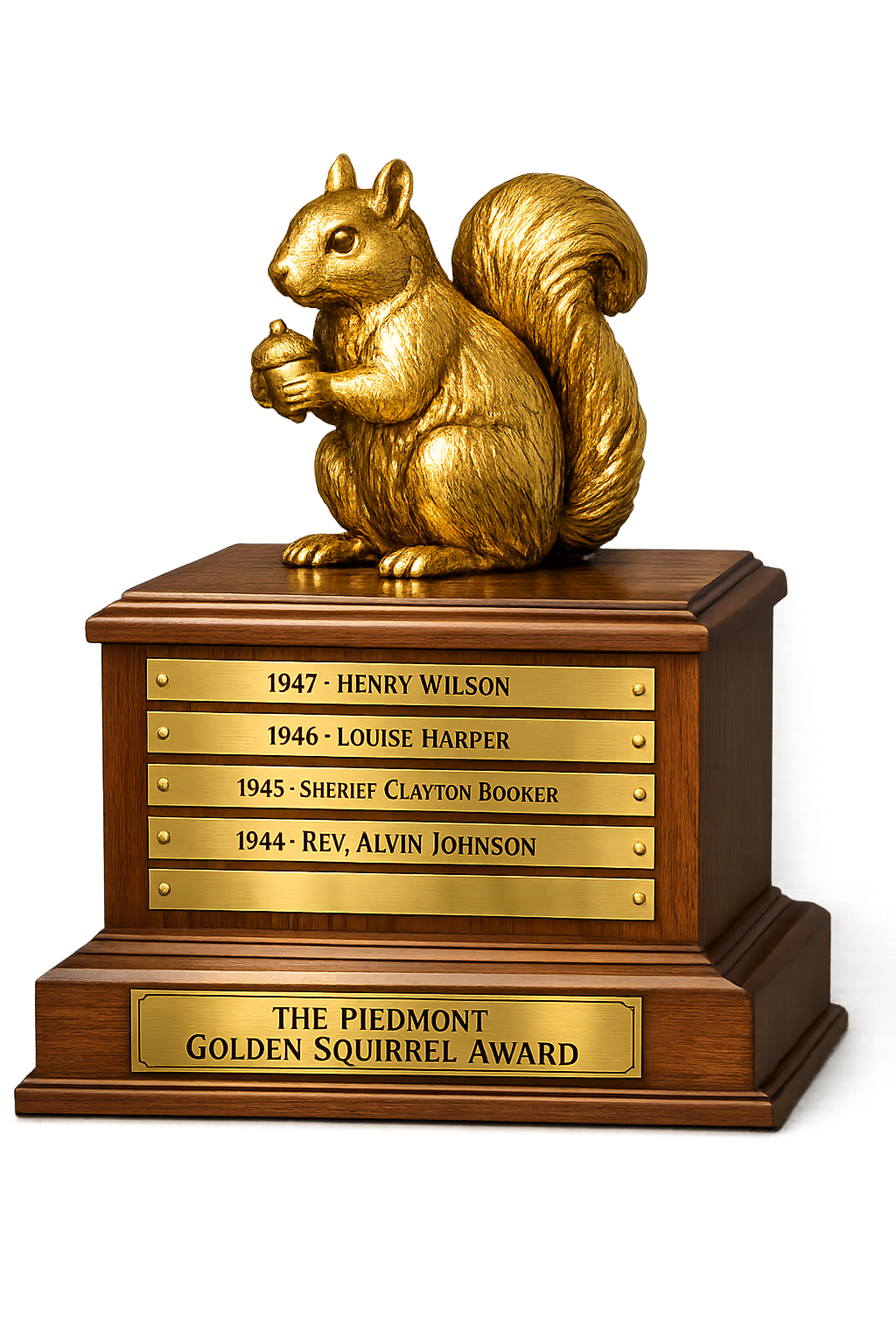
Summer of 1948. The Golden Squirrel had been approved. Nobody knew exactly what it would look like. Nobody knew who would make it. Nobody knew where it would be displayed. But everybody agreed it ought to exist. Which was the first sign trouble was coming.
* * *
The next question seemed simple. Who should receive the first one? The answer proved considerably less simple.
* * *
A committee was formed. Committees are proof that optimism sometimes survives adulthood. The mayor chaired it. The preacher participated. The coach participated. The newspaper editor inserted himself without invitation. Several business owners joined. And somehow Horace Blalock ended up on it too. Nobody could later explain how.
* * *
The first meeting lasted three hours. Nothing was accomplished. The second meeting lasted four hours. Less was accomplished. The third meeting produced actual nominees. Which only made matters worse.
* * *
Back on Hughes Street, Pearl nodded.
"That sounds about right."
"It is right."
Toby pointed his fork at her.
"I was there."
"You were twelve."
"I was observant."
* * *
The nominee list contained five names. The mayor. The coach. The preacher. A local doctor. And Clayton Reynolds. The man who had organized the uniform drive.
* * *
Most folks expected Clayton to win. Not because he campaigned. He didn't. Not because he asked. He didn't. But because everybody knew none of it would've happened without him.
* * *
Then Wilbur Crenshaw published the list. And all common sense left town. Letters appeared in the newspaper. Folks argued in barber shops. Arguments broke out in churches. One woman wrote a two-page letter explaining why her husband should have been nominated. Her husband disagreed. That created an entirely different argument.
* * *
The committee became overwhelmed. Names poured in. Suggestions multiplied. Complaints arrived daily. One gentleman nominated himself. Twice.
* * *
Back on Hughes Street, the crowd laughed so hard that Toby had to pause.
"That actually happened."
"No."
"It did."
"Who was it?"
The old man smiled.
"I'm protectin' the guilty."
* * *
By September, the committee finally decided enough was enough. A vote would be held. One vote. Final decision. No more arguments. No more discussion. No more nominations. The winner would become the first recipient of the Piedmont Golden Squirrel Award.
* * *
The vote was scheduled for the following Thursday. Tension spread through town. Everybody had an opinion. Everybody believed their opinion mattered. A good many of them were wrong.
* * *
The night before the vote, young Toby happened to be delivering newspapers. A job he took very seriously. Mostly because it allowed him to overhear things. That evening he passed the alley behind the newspaper office. And heard voices. Angry voices. Adult voices. The sort of voices children immediately pretend not to hear while listening very carefully. Young Toby stopped. Quietly. Carefully. The voices belonged to two men. One of them he recognized. The other he did not. The familiar voice said:
"You can't change it now."
The other replied:
"Watch me."
* * *
Back on Hughes Street, the crowd collectively leaned forward. Even Sheriff Booker. Even the children. Even Beulah Mae forgot to write.
"Tobe."
The old man stood.
"No."
"Tobe."
"You can't stop there."
The grin returned. The dangerous one. The grin of a man who knew exactly what he was doing. He shuffled toward the screen door. At the threshold he paused. Looked back. And said:
"Tomorrow night, we find out who's cheatin'."
Then he disappeared inside. Leaving forty people hollering after him from the yard.
* * *



I’m sitting here yelling, too.
LikeLiked by 1 person
Bless you, I love it!
LikeLike
I forgot to sign in. I ‘m sitting here yelling , too.
LikeLiked by 1 person
I love it, John! It makes me think I’m spinning a pretty good yarn.
LikeLiked by 1 person
That’s for sure.
LikeLiked by 1 person
Great Toby story that got folks yelling, Jim. It’s heartwarming that you’re posting such great stories.
LikeLiked by 1 person
Thank you so much, Tim! You made a happy man very old! LOL
LikeLiked by 1 person
You’re welcome, Jim. 😊 I don’t want to age anyone.
LikeLiked by 1 person