An Uncle Toby McCarley Porch Story
Night Twenty-Five: Clayton Reynolds Goes Home
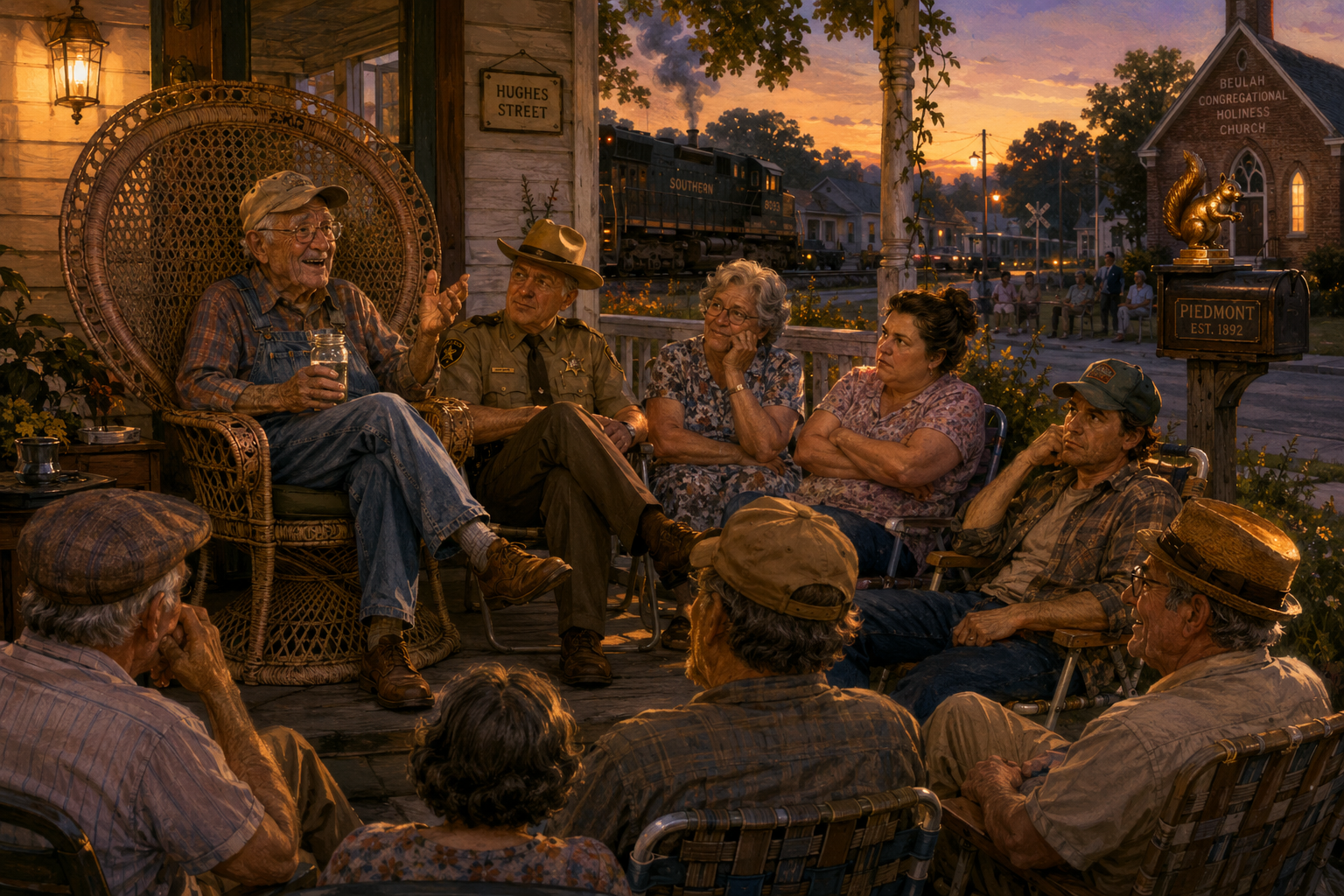
The twenty-fifth evening arrived quieter than the ones before it. Not because fewer people came. More came, actually. But folks spoke softer. Laughed less. Moved slower. Even before Uncle Toby stepped onto the porch, everybody knew what kind of night it was going to be.
The old man emerged carrying his sweet tea. No pie. No cookies. Just the tea. He settled into the peacock chair. Looked out across the crowd. And nodded.
For once, Earl didn’t rush him. Nobody did. The cicadas sang. A dog barked somewhere over on Dailey Street. The lanterns glowed softly.
Finally, Toby spoke.
“Well.”
A pause.
“Clayton Reynolds died in 1983.”
The porch remained still. And Hughes Street slipped away.
Spring, 1983. There was no tragedy. No accident. No dramatic final words. Just time. The same thing that comes for all of us, sooner or later.
Clayton Reynolds had spent a lifetime helping people. Then one day his body informed him that his helping days were nearing their end. He accepted the news about the same way he accepted everything else, with more grace than most people thought reasonable.
Back on Hughes Street, Pearl dabbed her eyes.
“That sounds like him.”
“It surely does.”
The old man took a sip of tea.
In 1983, people visited. Neighbors. Friends. Church members. Folks he’d helped. Folks he’d forgotten he’d helped. The house remained busy. Right up until it wasn’t.
Because that’s another thing life does. At first, everybody comes. Then fewer come. Then fewer still. Eventually the house grows quiet.
Maybelline sat beside her father one afternoon near the end. The room was peaceful. Sunlight filtered through the curtains. For a while neither spoke.
Then Clayton smiled. A little.
“You still keepin’ all those clippings?”
Maybelline laughed.
“Most of ’em.”
“Lord help us.”
A pause.
“You ever throw anything away?”
She shook her head.
“No, sir.”
Clayton smiled again. Then looked out the window. Toward the yard. Toward the world. Toward the years behind him.
And quietly said: “It’s all right, honey.”
Maybelline frowned.
“What is?”
A gentle shrug.
“Everything.”
The room fell silent.
Back on Hughes Street, nobody moved. Because everybody knew what came next. The old Toby stared into the darkness. Then softly continued.
A few days later, Clayton Reynolds died quietly with only Maybelline to witness his departure.
And Piedmont gathered. The church filled. Then overflowed. People stood along walls. Filled pews. Occupied every available space. Stories were told. Laughter mixed with tears. A preacher spoke. Friends remembered. Neighbors shared memories.
One man talked about a fence. Another about a roof. Another about a tractor. Tommy Green spoke about a creek. The crowd on Hughes Street sat perfectly still.
“He remembered.”
Pearl whispered.
“Yes.”
Toby smiled.
“He remembered.”
In 1983, Tommy stood before the congregation. His voice shook. Then he told the story. The water. The current. The rescue.
And when he finished, he said:
“I would’ve died if not for Clayton Reynolds.”
Silence filled the sanctuary. The good kind. The kind made from truth.
Maybelline sat beside her mother. Listening. Remembering. And for a little while, everything seemed exactly as it should be.
People remembered. Stories survived. The truth remained intact. The old Toby sighed.
A long sigh. Because everyone on Hughes Street already knew there had to be a “but” coming. Life always has one.
“Then the years passed.”
The words settled over the yard.
“The funeral ended.”
A pause.
“The flowers faded.”
Another.
“The stories got told less often.”
The crowd sat quietly.
“And eventually…” The old man looked toward the stars.
“…the rememberin’ started losin’ ground again.”
Nobody spoke. Nobody needed to. The old man slowly stood. This time nobody protested. Nobody had the heart.
At the screen door he stopped. One hand on the handle. Then looked back.
And said:
“Tomorrow night…”
“Maybelline opens the scrapbook again.”
A pause.
Then:
“And finds somethin’ she wasn’t lookin’ for.”
The screen door closed softly behind him. And for a long while afterward, nobody on Hughes Street moved. They just sat there. Thinking about a good man. A grateful town.
And how quickly even the brightest footprints begin to fade from the path.


Sweet
LikeLiked by 1 person
It’s so nice that people thought so well of Clayton, Jim. It sounds to me that he deserved such good thoughts.
LikeLiked by 1 person
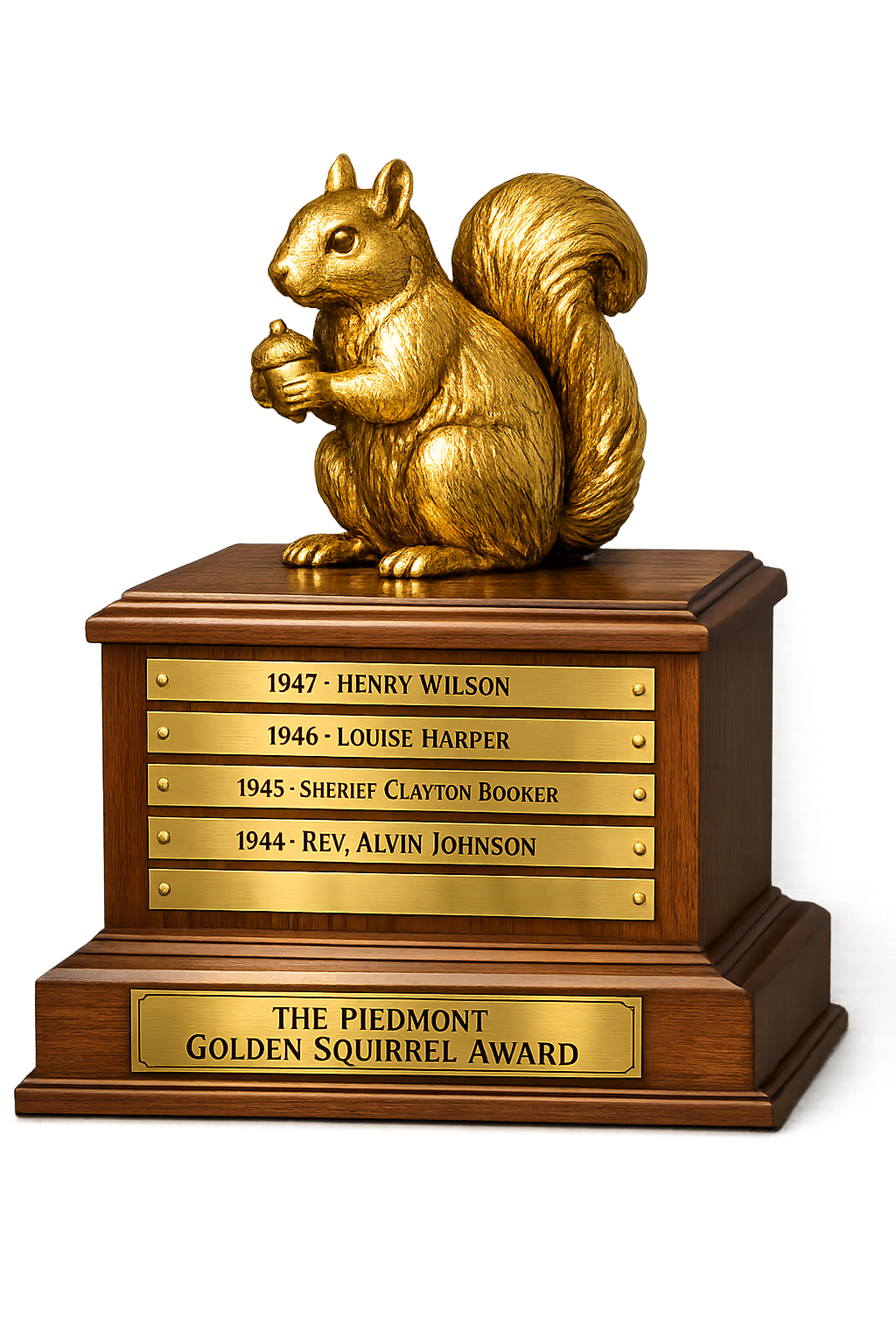
It is, Tim. But, it’s a shame no one ever thought to award him the Squirrel, isn’t it?
LikeLiked by 1 person
Yes, indeed, Jim. He deserved it, it seems to me.
LikeLiked by 1 person