
An Uncle Toby McCarley Porch Story
Night Twenty-Eight: The Question
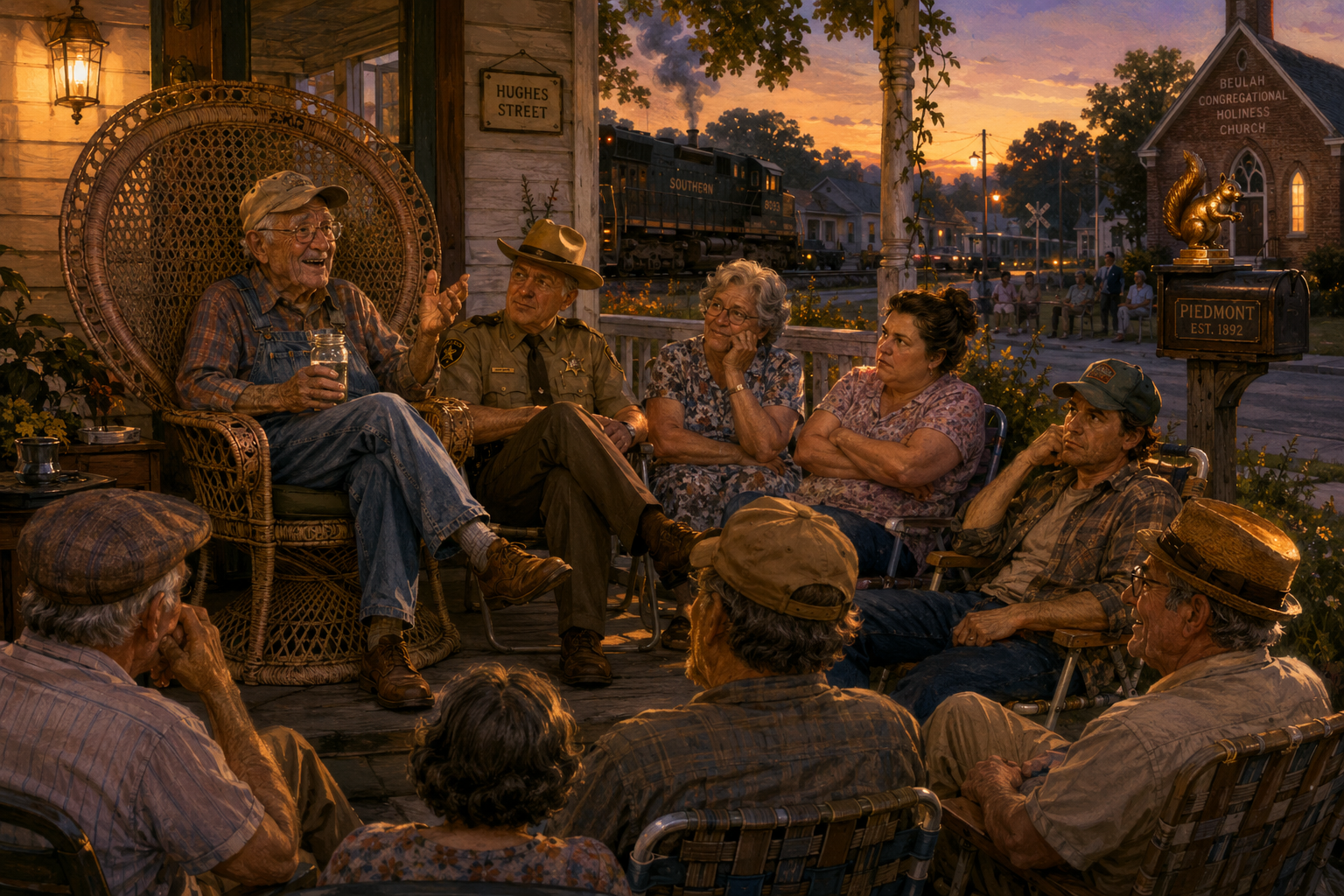
The twenty-eighth evening arrived with a breeze moving through Hughes Street. Not much of one. Just enough to stir the leaves and carry the smell of fresh-cut grass.
The Porch Club assembled as usual. Chairs filled. Conversations started. Sweet tea appeared. Nobody knew where all the sweet tea kept coming from. At this point, it seemed to generate naturally.
Uncle Toby emerged from the house. The applause greeted him. Again. The old man shook his head.
“I have become entirely too popular.”
“You always were,” Pearl replied.
Toby smiled.
“Now, that’s a lie, and you know it.”
He settled into the peacock chair. The crowd quieted. The lanterns glowed. And the old man nodded.
“The question.”
The audience leaned forward. And Hughes Street slipped away.
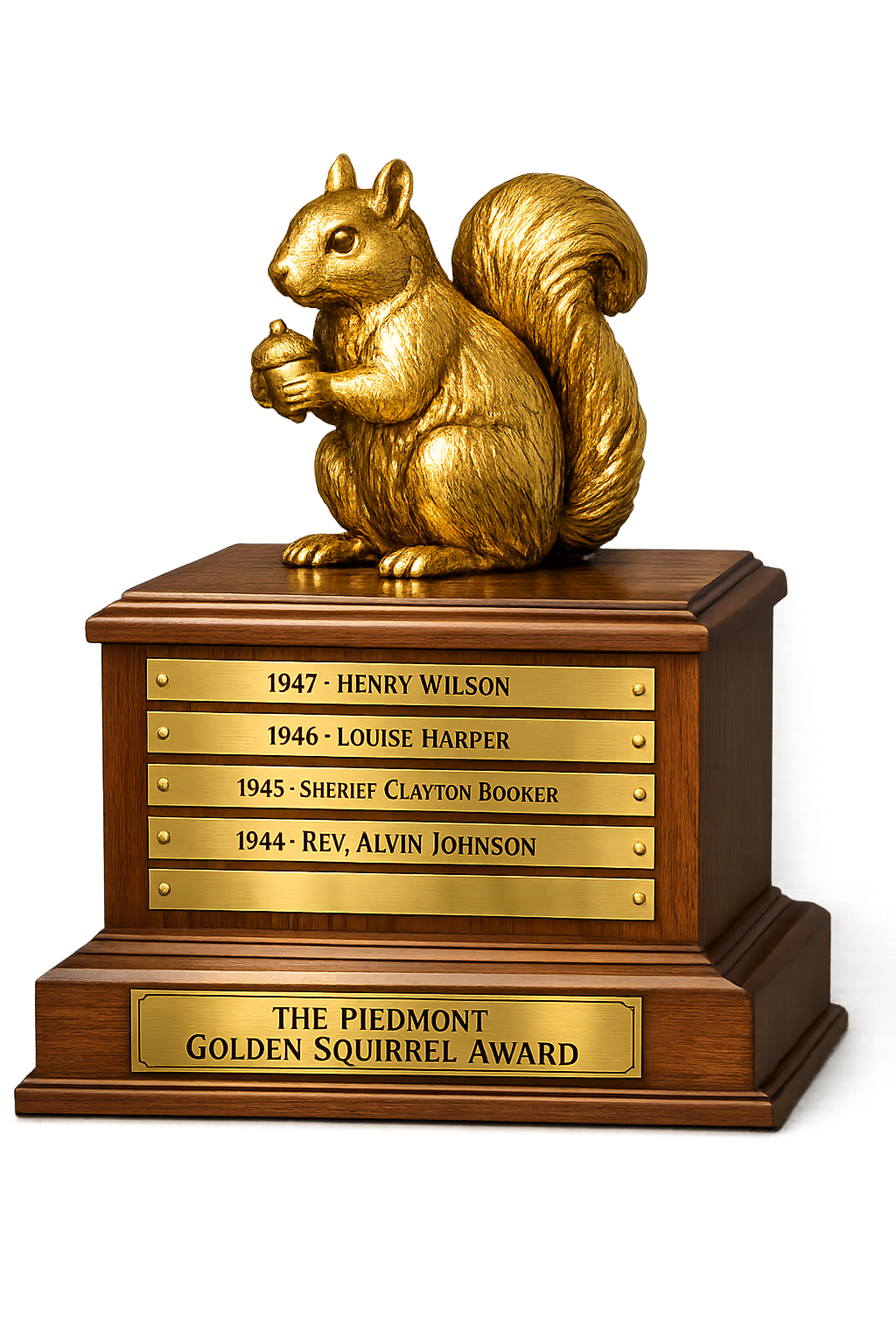
Spring, 1991. The Golden Squirrel Committee met in the community room above the old hardware store. Some things changed. Some things never did. The committee still argued. Still debated. Still wandered off topic. Tradition mattered.
That afternoon the agenda included banquet planning. Budget discussions. Decoration concerns. And whether squirrel-shaped cookies were dignified. The answer was no. Then yes. Then maybe. The matter remained unresolved.
Back on Hughes Street, Earl nodded.
“Committee.”
“Committee.” Toby agreed.
In 1991, the meeting proceeded normally. Until Maybelline Reynolds raised her hand. The room grew quiet. Not because she was loud. Quite the opposite. When quiet people speak, folks tend to listen.
“Yes, ma’am?” Asked the chairman.
Maybelline smiled politely.
Then asked: “Has anyone ever considered awardin’ the squirrel posthumously?”
Silence.
Absolute silence.
The kind of silence usually reserved for unexpected funerals and tax audits.
Back on Hughes Street, the Porch Club sat upright.
“Oh,” Pearl whispered.
The old man nodded.
“Oh, indeed.”
In 1991, the chairman blinked. Twice. Several committee members exchanged glances. Nobody had ever asked.
Not once.
The award had always gone to living recipients. Always. Tradition. The most powerful phrase in local government.
Finally, someone cleared his throat.
“I suppose we could.”
Another committee member frowned.
“Could what?”
“Consider it.”
The room shifted. Maybelline remained calm. Patient. Polite. She’d had forty years of practice.
Then she asked a second question. The one that truly mattered.
“Has anyone ever nominated Clayton Reynolds?”
The room fell silent again.
Back on Hughes Street, nobody moved. Not even Earl. The old Toby smiled sadly. Because he remembered exactly what happened next.
In 1991, the chairman began searching through old records. Folders appeared. Ledgers appeared. Boxes appeared. Dust appeared. Everyone coughed. Eventually the answer arrived.
“No.”
One word.
No.
Clayton Reynolds had never once been formally nominated.
Not in 1949.
Not in 1952.
Not in 1963.
Not ever.
The room sat stunned. Not because they disliked Clayton. Everybody liked Clayton. The problem was simpler. Everybody assumed somebody else had already done it.
Back on Hughes Street, Earl slapped his knee.
“There it is.”
The old man pointed.
“There it is.”
The crowd groaned. Because they’d all seen it happen. In churches. In clubs. In families. In towns.
Everybody assumes. Nobody checks.
In 1991, Maybelline sat quietly. Listening. Not angry. Not triumphant. Just listening. Then she opened a folder she’d brought with her.
Inside were newspaper clippings. Photographs. Letters. Programs. Notes. Forty years of memory.
The committee stared.
One member whispered: “Good Lord.”
Back on Hughes Street, laughter rolled through the yard. The old man smiled.
“It was an impressive folder.”
A pause.
“Actually, it was three boxes.”
The crowd laughed harder.
In 1991, Maybelline gently placed the materials on the table.
Then she said: “I thought somebody oughta remember.”
The room sat quietly. Nobody knew what to say. Because she was right. The old Toby slowly stood.
The crowd objected immediately.
“Tobe.”
“Come on.”
“Not yet.”
The grin appeared. Dangerous as ever. At the screen door he paused. Turned. And said:
“Tomorrow night…”
“The committee makes a decision.”
“And Maybelline goes home disappointed.”
The screen door slammed. And a collective groan rolled across Hughes Street. Because everybody already suspected the answer.
And now we’re headed toward the heartbreak.
Not because the committee is cruel or villainous. But because sometimes institutions are very good at honoring tradition and very poor at correcting old oversights.


Fascinating story, Jim! I think it would be great if Clayton was nominated for the reward posthumously.
LikeLiked by 1 person
Thanks, Tim. It would go a long way towards fixing a gross oversight, wouldn’t it?
LikeLiked by 1 person
Yes, indeed, Jim.
LikeLiked by 1 person