A Piedmont Porchlight Story
There are three things you can count on finding at the Coffee Cup before eight o’clock. Fresh coffee. Hot biscuits. And somebody absolutely certain they know how to fix the country.
I’ve seen men solve inflation between pancakes. I’ve watched world peace nearly break out over sausage gravy. If the President had spent one Tuesday morning in Booth Five, he’d have gone home with enough advice to last two administrations.
Nobody ever changed anybody else’s mind. But Lord, they enjoyed trying. One particular Wednesday started no differently. Sheriff Booker was convinced Washington had lost what little sense it once possessed. Curtis Pope wasn’t entirely disagreeing, though he maintained the whole mess could’ve been fixed if people simply learned to listen before they talked.
Earl Simmons claimed he’d been saying the same thing since Truman. Nobody believed him. Hattie just kept filling coffee cups without taking sides.
She’d learned years ago that caffeine was cheaper than referees.
The conversations bounced from one booth to another like ping-pong balls. Voices got a little louder. Fingers pointed toward invisible maps. Somebody slapped a newspaper for emphasis. Old Mr. Dobson muttered, “You’re all wrong,” though nobody was sure which subject he’d joined.
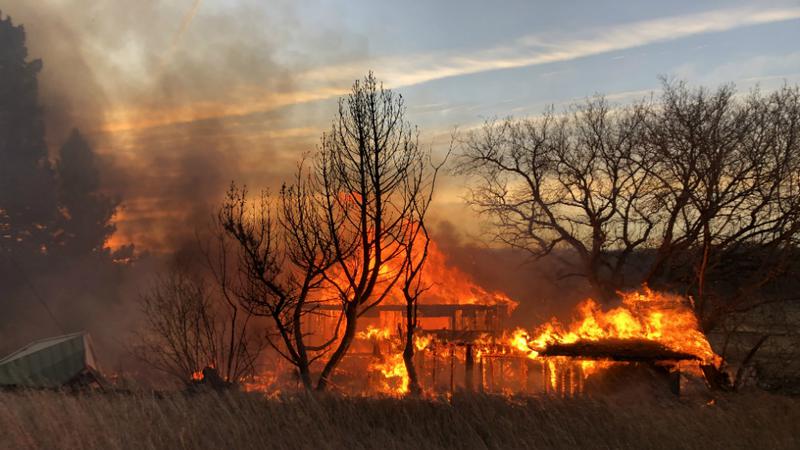
It was shaping up to be an ordinary morning. Then the bell over the front door jingled. In walked Tommy Granger. Tommy was assistant chief at the volunteer fire department. His boots were still muddy. His yellow turnout coat smelled faintly of smoke.
He didn’t holler. Didn’t wave his arms. He simply took off his cap. “Hattie,” he said quietly, “the Johnson place caught fire about half an hour ago.”
The room went still. Everybody in Piedmont knew the Johnsons. Young couple. Three children. Old farmhouse out on Gnatville Road.
Before Tommy could say another word, chairs scraped backward. Curtis reached for his truck keys. Sheriff Booker was already halfway to the door. Earl dug out his wallet. “Did everybody get out?”
Tommy nodded. “They’re safe.” A dozen sets of shoulders relaxed all at once. “The house…” Tommy continued, “…not so much.”
Nobody asked who’d voted for whom. Nobody cared. Hattie disappeared into the kitchen. Five minutes later she came back carrying grocery sacks. Ham sandwiches. Turkey sandwiches. Potato chips. Cookies wrapped in wax paper.
She pointed toward the counter. “Whoever’s headed that way, take these.”
Mrs. Landry walked in carrying two quilts she’d been piecing all summer. “I’ll make another one.” The pharmacist from down at Watson’s Drugs stepped through the door with a box of toiletries tucked under one arm.
Curtis looked at Sheriff Booker. “You got room in your truck?” Booker nodded. “I’ll make room.”
Within fifteen minutes, the Coffee Cup looked almost empty. The arguments had vanished. The people hadn’t. Late that afternoon, I drove out to see if there was anything Magnolia Mortuary could do. There wasn’t. Thankfully.
But there were pickup trucks lined up along both sides of the road.
Men were hauling lumber. Teenagers were picking nails out of the yard with magnets. The ladies from First Baptist had somehow set up folding tables loaded with enough food to feed an Army regiment.
Children who’d lost nearly everything were chasing one another through the grass like children somehow always manage to do. The Johnsons stood in the middle of it all, looking overwhelmed. Not because they’d lost a house. Because they suddenly realized how many people had shown up before anybody even asked.
A week later, everybody was back at the Coffee Cup. The coffee tasted the same. The biscuits were just as good. And sure enough, somebody brought up politics before breakfast.
Curtis took a sip of coffee and smiled. “You know somethin’? I liked us better last Tuesday.”
Nobody answered. We all knew exactly what he meant. I’ve thought about that morning more than once. Not because it was the only day nobody argued. It wasn’t. By Thursday we’d resumed solving the nation’s problems with remarkable confidence.
No.
I remember it because, for a few precious hours, Piedmont remembered something bigger than being right. We remembered that the fellow across the table wasn’t an opinion. He was a neighbor. And neighbors don’t ask how you voted before they hand you a hammer.
If only we could remember that a little more often…
The coffee might taste even better.



A great and touching read!
LikeLiked by 1 person
Thank you, Vero! Thank you so much!
LikeLiked by 1 person
You’re most welcome Jim!
LikeLiked by 1 person
Excellent!
LikeLiked by 1 person
Thanks, Karla!
LikeLike
A fond wish for today.
LikeLiked by 1 person
Beautifully described! Similar sometimes to my AL neighborhood, among older residents. Politics may differ but in a crisis, neighbors help.
LikeLiked by 1 person
I hope we never lose that, Leah. Thanks so much for coming by today and sharing your thoughts!
LikeLiked by 1 person
Not talking politics is good, Jim. 😊
LikeLiked by 1 person
Yes, it is. In all circumstances.
LikeLiked by 1 person