
A Piedmont Porchlight Story
Curtis Pope always said there were three kinds of men who came into a barbershop.
Men who needed a haircut, men who needed somebody to listen to ’em, and men whose wives had sent ’em down there to get ’em out of the house.
He claimed the third kind was his most dependable source of income.
Curtis had been cutting hair in Piedmont long enough to know most of the heads in town by the backs of ’em. He could recognize a customer through the front window without ever seeing his face, and he could tell which men were about to ask for a discount by the way they took off their hats.
There were two barber chairs in his shop, though Curtis didn’t employ another barber. The second chair was mostly used for stacking newspapers, holding coats, and occasionally accommodating somebody who’d had one too many discreet beers down at the pool hall.
There was also an old wooden chair against the back wall.
Nobody remembered exactly when it got there.
Curtis called it the third chair.
One Thursday afternoon in October, a gentleman walked into the shop just as Curtis was finishing up with Earl Pritchett.
The gentleman wore a dark gray suit, a black tie, and a felt hat pulled low over his forehead. He was tall and narrow, with the sort of posture you generally associate with undertakers and school principals.
He took off his hat and nodded.
“Afternoon, Curtis.”
Curtis glanced up.
“Afternoon.”
Then he looked again. There was something familiar about the man, though Curtis couldn’t have said what it was.
“Need a haircut?”
“No, thank you.”
“Shave?”
“Maybe later.”
“Well, have a seat, then. Earl’s just about done.”
The gentleman crossed the room and settled into the old wooden chair.
Curtis watched him in the mirror. “Say, don’t I know you?”
“I believe you do.”
“Well, you’ll have to forgive me. My memory ain’t what it used to be.”
The gentleman smiled. “Some things are better forgotten.”
Earl looked at Curtis in the mirror. “That sounds like something my second wife said.”
“Your second wife said a great many things,” Curtis replied. “Most of ’em in front of witnesses.”
The gentleman chuckled softly.
Curtis finished Earl’s haircut, dusted his neck with powder, and took his money.
Earl left.
The gentleman remained seated.
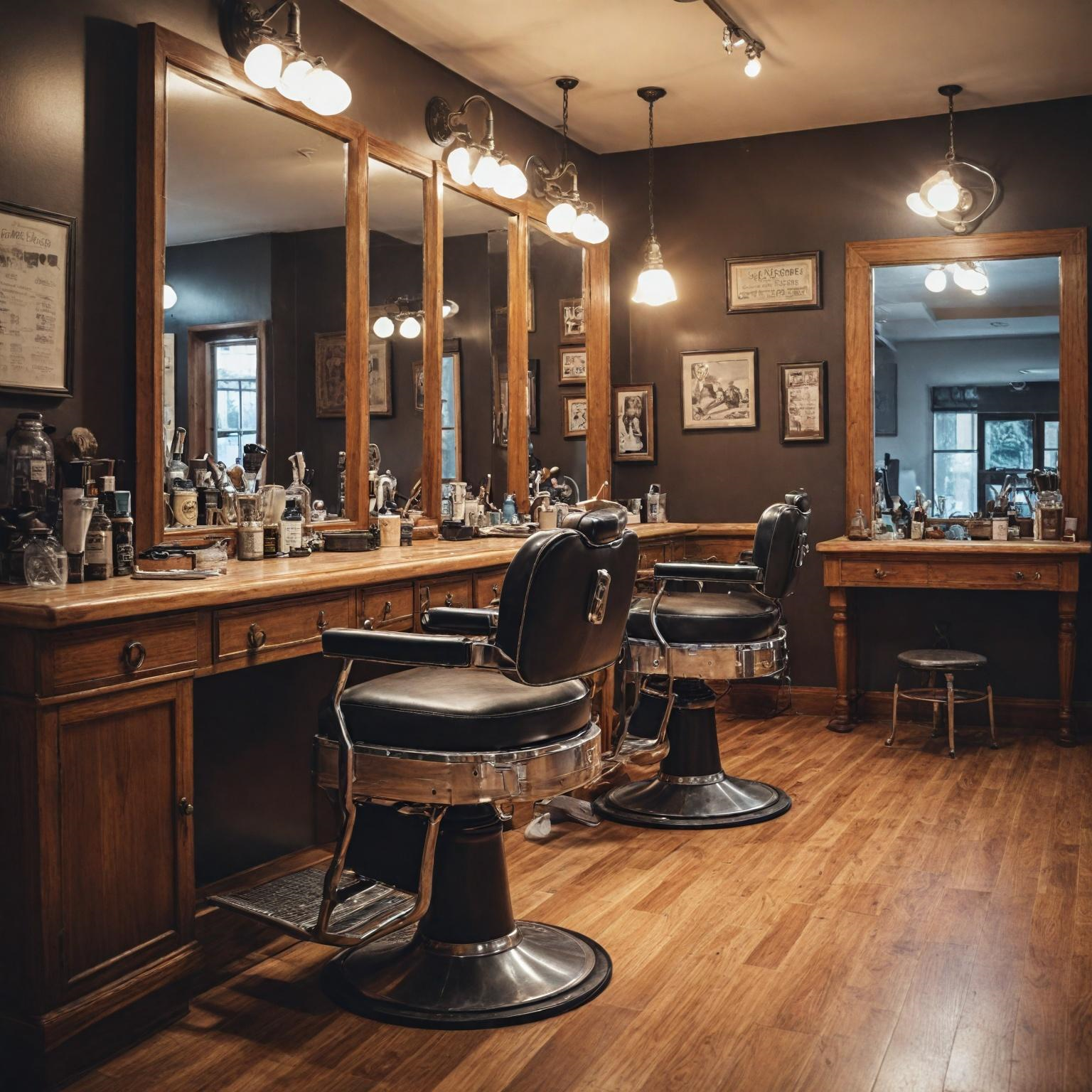
Curtis swept the floor, straightened his combs, and turned the little sign in the window to CLOSED.
“You still want that shave?”
“Not today.”
Curtis frowned.
“Then what’d you come in for?”
The gentleman looked toward the barber chair.
“I was wondering whether you remember the last man who died in that chair.”
Curtis stopped sweeping.
Now, barbershops are peculiar places. Men will discuss politics, marriages, money troubles, and medical conditions with a barber that they wouldn’t mention to their own brothers.
But there are some things even a barbershop doesn’t talk about.
And that was one of ’em.
Curtis leaned his broom against the counter.
“That was a long time ago.”
“Yes.”
“Before you were born, most likely.”
The gentleman said nothing.
Curtis scratched his chin.
“Fellow named Amos Bell. Worked for the railroad. Had hisself a bad heart, though nobody knew it at the time.”
“Did he?”
“Sure did. Came in one Saturday morning, asked for a shave, and died right there before I could finish lathering his chin.”
“Was anybody with him?”
Curtis looked toward the window.
“Well, now, that’s a peculiar question.”
“Was anybody with him, Curtis?”
Curtis shifted his weight.
“There was another fellow. Sat right where you’re sitting.”
The gentleman rested his hands on his knees.
“Do you remember his name?”
Curtis shook his head.
“Can’t say I do.”
“Think carefully.”
The shop was quiet except for the ticking of the clock above the mirror.
Curtis studied the gentleman.
And suddenly, he remembered something else.
The man who’d accompanied Amos Bell hadn’t asked for a haircut, either.
Hadn’t asked for a shave.
He’d simply sat in the third chair, watching Amos in the mirror.
Curtis remembered that he’d worn a dark suit.
And a black tie.
And a felt hat.
“Lord Almighty,” Curtis whispered.
The gentleman stood.
“Well, I reckon I’d best be going.”
Curtis didn’t move.
The gentleman put on his hat.
“Thank you for remembering.”
He walked to the door.
“Wait a minute,” Curtis said.
The gentleman paused.
“Who are you?”
For a moment, Curtis thought the man might answer.
Instead, he said, “I’ll see you next October.”
Then he stepped outside.
Curtis followed him to the door.
The sidewalk was empty.
There was no car pulling away, or anybody walking toward the depot. Just the afternoon sunlight lying across the pavement and a few leaves skittering along the gutter.
Curtis stood there until Miss Lorene came around the corner carrying a paper sack from Blackwelder’s Hardware.
“What’re you gawking at?” she asked.
Curtis swallowed.
“Fellow just left here.”
“What fellow?”
“Dark suit. Black tie. Hat.”
Miss Lorene stopped.
She looked toward the depot.
Then she looked back at Curtis.
“Did he sit in that old chair?”
Curtis nodded.
Miss Lorene’s face changed.
“Did he ask about Amos Bell?”
Curtis felt a chill work its way up his back.
“How’d you know that?”
Miss Lorene took a step closer.
“Because he asked me about Amos yesterday.”
“What’d he want to know?”
“Whether anybody remembered where Amos was buried.”
Curtis stared at her.
“Well, where is he buried?”
Miss Lorene looked down at her sack.
“That’s the thing, Curtis.”
“What thing?”
“Amos Bell ain’t buried nowhere around here.”
“Then where?”
She shook her head.
“Nobody ever found out.”
Curtis opened his mouth, then closed it.
Miss Lorene started to walk away.
“Wait,” Curtis called. “What happened to him?”
She turned.
“Curtis, you ought to know. You was there.”
Then she continued down the sidewalk.
Curtis went back inside and sat in his barber chair.
He stayed there a long time.
Eventually, he got up, walked to the old wooden chair, and examined it.
There was nothing unusual about it. Just a plain chair with a worn seat and one leg slightly shorter than the others.
He reached down to straighten it.
And that’s when he noticed the shaving brush.
It was lying beneath the chair.
Curtis recognized it immediately.
A dark wooden handle, a silver band, and a small crack near the base.
He hadn’t seen that brush in a good many years.
Not since the morning Amos Bell died, as a matter of fact.
Curtis picked it up. The bristles were still damp. And somewhere behind him, in the mirror, a man cleared his throat.
Curtis didn’t turn around.
He simply put the brush on the counter, took off his apron, and walked out the door. He left the lights burning.
The next morning, Earl Pritchett found Curtis sitting outside the Coffee Cup, drinking his third cup of coffee.
“Shop closed today?” Earl asked.
“Yep.”
“You sick?”
“Nope.”
“Then why ain’t you working?”
Curtis took a long swallow.
“Decided to take a vacation.”
“Where you going?”
Curtis looked across the street toward his barbershop. “Anywhere that ain’t got a barber chair.”
And for once in his life, Curtis Pope didn’t have another word to say.
⁂