
A Piedmont Porchlight Story
V. A Mother’s Reckoning
There are certain things a Southern woman can accomplish without raising her voice.
She can silence a roomful of children with a glance. She can persuade a grown man to reconsider his behavior merely by using his entire Christian name. And she can communicate an opinion of considerable severity by setting down a coffee cup just a little harder than necessary.
Rebecca Mercer had always been particularly gifted in these matters.
Daniel had seen her reduce his father to apologetic silence with nothing more than a raised eyebrow.
He had once watched her convince an automobile salesman to lower his asking price by three thousand dollars without ever suggesting that she might purchase the vehicle elsewhere.
But he’d never seen her frighten anyone quite the way she was frightening Agnes Bellweather.
The woman in the green dress had retreated another step.
Her face was pale.
“You’re not supposed to be here.”
Rebecca smiled.
“Well, Agnes, I’ve never been particularly interested in what I’m supposed to do.”
“You were removed.”
“I was inconvenienced.”
“You were erased.”
Rebecca’s smile disappeared.
“Apparently, you didn’t do a very thorough job.”
Daniel looked from one woman to the other.
“Mom?”
Rebecca glanced at him.
And for just a moment, her expression softened.
“Oh, sweetheart.”
She took a step toward him.
Agnes moved.
It was barely perceptible. A slight shift of her shoulders, a movement of her right hand.
Rebecca stopped.
“Don’t.”
Agnes became still.
“He’s mine,” Rebecca said.
The words were quiet.
Terribly quiet.
Agnes looked at Daniel.
“That depends.”
Rebecca raised her telephone.
“Would you like to find out?”
For several seconds, neither woman moved.
Then Agnes lowered her eyes.
“No.”
Rebecca nodded.
“That’s what I thought.”
Professor Whitcomb stood beside Daniel, staring at the two women as though he’d just discovered that the entire faculty senate had been replaced by rattlesnakes.
“Rebecca?” he whispered.
She turned toward him.
“Elias.”
“I thought…”
“I know what you thought.”
“But I saw you die.”
“Which time?”
Whitcomb opened his mouth.
Then closed it.
Rebecca sighed.
“Oh, Elias. You’ve been keeping such careful records, and you still haven’t learned to ask the right questions.”
Daniel felt something give way inside him.
It wasn’t a physical sensation.
Not exactly.
It was the feeling of discovering that the floor beneath one’s feet had been painted to resemble solid ground.
“Mom, what in God’s name is happening?”
Rebecca looked at him.
For the first time, he saw something in her face that frightened him more than Agnes Bellweather’s unnatural shadow.
Regret.
“Daniel, honey, there’s something I should’ve told you a long time ago.”
He laughed.
It was an ugly sound.
“Everybody keeps saying that.”
“I know.”
“Professor Whitcomb says we’ve done this before. That woman says there’ve been other Daniels. And now you show up in 1893 with your telephone and start threatening people!”
Rebecca nodded.
“That’s a fair summary.”
“A FAIR SUMMARY?”
“Daniel Christopher Mercer.”
He stopped.
He’d heard that tone before.
Usually immediately before discovering that his mother had learned something he’d hoped to keep from her.
“Lower your voice.”
Daniel stared.
“Mom!”
“Lower it.”
He did.
Not because he wanted to.
Because twenty-three years of experience had taught him that arguing with Rebecca Mercer in that particular tone was a pursuit with limited prospects for success.
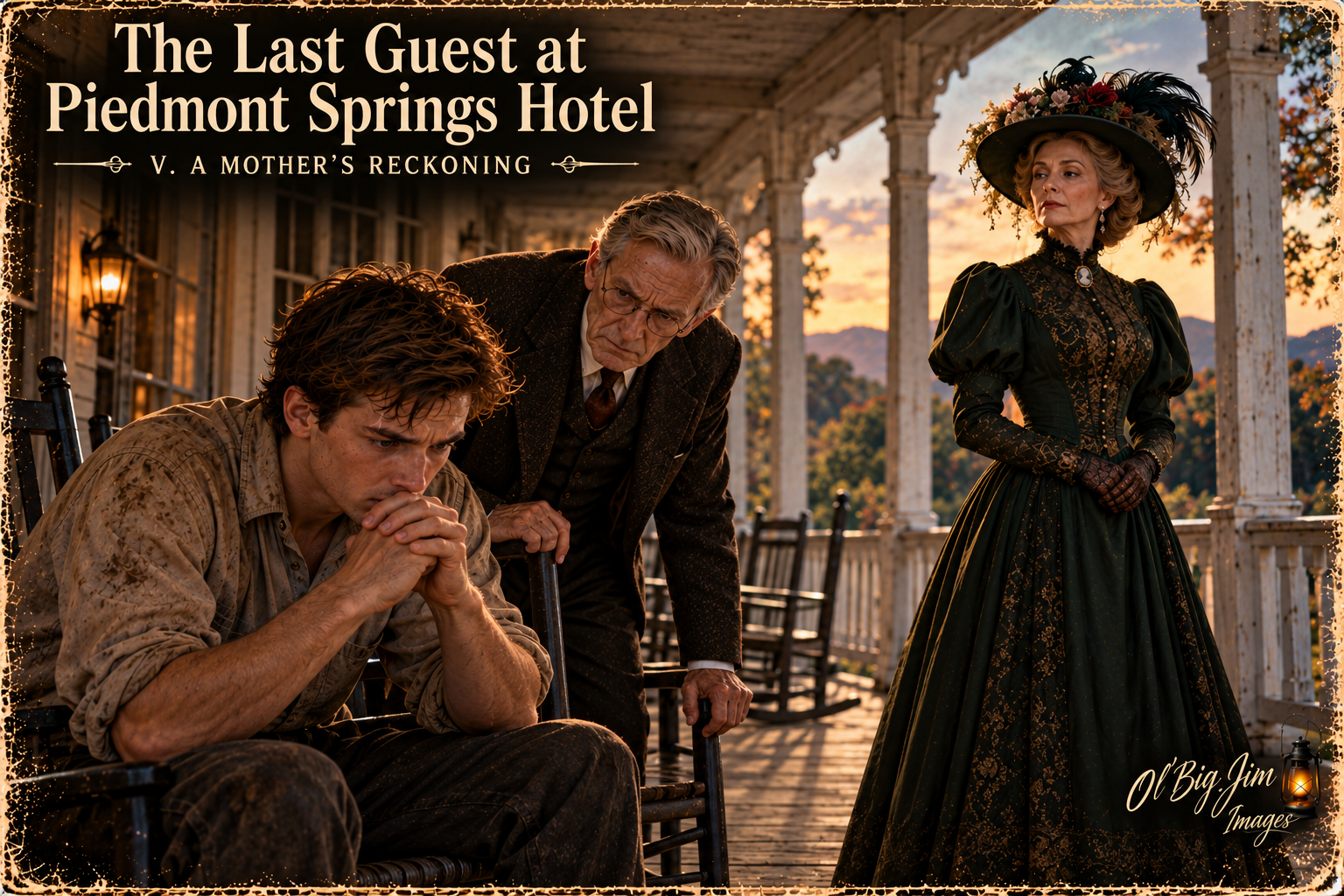
Agnes Bellweather made a small sound.
It might have been a laugh.
Rebecca turned toward her.
“Something amusing?”
“No, ma’am.”
“Then hush.”
Agnes hushed.
Professor Whitcomb looked as though he might faint.
Rebecca took Daniel’s hand.
Her fingers were warm.
Ordinary.
Human.
He clung to that fact with a desperation that surprised him.
“First,” she said, “I want you to understand something. You were born on March nineteenth, two thousand three. I carried you for nine months, gave birth to you at Regional Medical Center, and spent the next twenty-three years wondering whether I’d ever manage to raise a child who could remember where he left his shoes.”
Daniel swallowed.
“All right.”
“You’re my son. Nobody’s going to convince you otherwise.”
Agnes shifted.
Rebecca didn’t look at her.
“Nobody.”
Daniel nodded.
“Then what did she mean about the other Daniels?”
Rebecca glanced at Whitcomb.
“How many have you told him about?”
“Seventeen.”
She closed her eyes.
“Oh, Elias.”
“That’s how many I remember.”
“I know.”
“Rebecca, I tried…”
“I know you did.”
The gentleness in her voice seemed to hurt him more than anger would have.
She turned back to Daniel.
“Imagine you’ve written a letter.”
Daniel frowned.
“A letter?”
“Yes. A perfectly ordinary letter. You make a mistake, so you tear it up and start again.”
“All right.”
“Now imagine that the first letter doesn’t disappear.”
Daniel waited.
“It stays somewhere. Every word you wrote. Every mistake you made. Every sentence you decided to change.”
“Where?”
Rebecca looked toward the hotel.
“That’s the problem.”
Daniel followed her gaze.
The windows were crowded with faces.
He could see them now.
Men.
Women.
Children.
All watching.
None moved.
Rebecca continued.
“Most of the time, when something happens, it simply happens. Yesterday becomes yesterday, and tomorrow hasn’t arrived.”
“Most of the time?”
“Yes.”
She glanced at Agnes.
“But sometimes somebody finds a way to make yesterday happen again.”
Daniel felt a chill.
“Time travel?”
“Not exactly.”
“Then what?”
Rebecca hesitated.
“Revision.”
The word seemed to settle over the lawn.
Even Agnes Bellweather looked uncomfortable.
“Somebody discovered a way to change what had already happened,” Rebecca said. “Not by traveling backward and making a different choice, but by replacing the choice that was made.”
Daniel stared at her.
“Replacing it?”
“Yes.”
“And the original?”
Rebecca looked toward the windows.
“Doesn’t always go away.”
One of the figures behind the glass raised a hand.
Daniel recognized him.
It was himself.
Not the Daniel in the photograph.
Another Daniel.
Older.
Perhaps thirty.
His hair was thinning at the temples. A narrow scar ran down his cheek.
He pressed his palm against the window.
Then another figure appeared beside him.
Daniel again.
Younger this time.
Perhaps nineteen.
Then another.
And another.
The windows filled with his own face.
Some frightened.
Some angry.
One laughing soundlessly.
One weeping.
Daniel stumbled backward.
“Mom?”
Rebecca caught him.
“Don’t look at them.”
“Those are…”
“I know.”
“Are they alive?”
She didn’t answer.
“Mom!”
Her eyes filled with tears.
“I don’t know, sweetheart.”
Agnes Bellweather spoke quietly.
“They are when they’re remembered.”
Rebecca turned on her.
“Be still.”
Agnes lowered her eyes.
But Daniel had heard.
He looked toward the hotel again.
The faces were gone.
Only the ordinary reflections of trees remained.
Professor Whitcomb sank onto a nearby bench.
“I thought I was saving him,” he whispered.
Rebecca looked at him.
“You were.”
“Then why…”
“Because you kept saving the wrong thing.”
Whitcomb stared.
Rebecca sat beside him.
For a moment, they looked like two old friends discussing a matter of considerable sadness.
“Do you remember the first night?” she asked.
Whitcomb closed his eyes.
“October seventeenth.”
“Yes.”
“1893.”
“Yes.”
“The storm.”
Rebecca nodded.
“The storm.”
Daniel looked toward the sky.
It was cloudless.
“What storm?”
Neither answered.
Whitcomb’s hands began trembling.
“The guests were gathered in the dining room,” he said slowly. “The lamps were lit. Agnes had served supper.”
Agnes Bellweather stood motionless beside the verandah steps.
“The piano was playing,” Whitcomb continued. “Somebody was laughing. I remember a woman in a yellow dress.”
Rebecca nodded.
“Go on.”
“And then…”
He stopped.
Daniel waited.
“And then what?”
Whitcomb opened his eyes.
“I remember the clock.”
Rebecca’s face changed.
“What clock?”
“The grandfather clock in the entrance hall.”
“What did it do?”
Whitcomb swallowed.
“It struck thirteen.”
Agnes made a sharp sound.
Rebecca turned toward her.
“Don’t.”
But Agnes was staring at Whitcomb.
“You remember that?”
He nodded.
Her lips parted.
“That’s impossible.”
Rebecca stood.
“Apparently not.”
Agnes looked toward the hotel.
For the first time, Daniel saw her glance at the open front doors with unmistakable dread.
“That clock hasn’t struck thirteen in…”
She stopped.
Rebecca stepped toward her.
“In how long, Agnes?”
The woman shook her head.
“Don’t make me say it.”
“How long?”
Agnes’s eyes filled with tears.
And Daniel realized something astonishing.
Whatever Agnes Bellweather was, she could be frightened.
Not merely startled.
Not merely surprised.
Frightened down to the very center of whatever passed for her soul.
“Since before the hotel,” she whispered.
Rebecca went still.
Whitcomb looked up.
“What?”
Agnes shook her head.
“The hotel wasn’t the beginning.”
Rebecca stared at her.
“Agnes.”
“The spring was here first.”
“Agnes, don’t.”
“The spring was here before the road, before the town, before anybody thought to build a hotel.”
Rebecca took another step.
“That’s enough.”
But Agnes seemed unable to stop.
“People came to drink the water. They said it cured their ailments. Made them young. Made them remember things they’d forgotten.”
Daniel thought of the old mineral spring.
The broken pipes.
The stone basin beneath the trees.
Agnes’s voice dropped.
“But sometimes they remembered things that hadn’t happened yet.”
Whitcomb stood.
“Dear God.”
Agnes looked at him.
“And sometimes they remembered things that had happened to somebody else.”
Rebecca seized her arm.
“Stop talking.”
Agnes turned toward her.
“Why?”
Rebecca’s grip tightened.
“Because it can hear you.”
Silence.
A breeze moved across the lawn.
Somewhere inside the hotel, a floorboard creaked.
Daniel looked at his mother.
“What can hear us?”
Rebecca didn’t answer.
Agnes stared toward the building.
Then, very slowly, she raised one finger.
And pointed.
Not toward the hotel.
Not toward the spring.
Toward the ground beneath their feet.
The first sound was so faint that Daniel almost missed it.
A ticking.
Regular.
Mechanical.
Like the movement of an old clock.
He looked around.
“Do you hear that?”
Whitcomb nodded.
Rebecca closed her eyes.
The ticking grew louder.
It seemed to come from everywhere.
Beneath the grass.
Inside the trees.
From the stone foundations and the earth beneath them.
Then Daniel heard something else.
A second ticking.
Slightly out of rhythm with the first.
Then a third.
A fourth.
Soon the entire lawn seemed filled with the sound of hundreds of clocks, each keeping its own peculiar time.
Agnes Bellweather began to cry.
Not loudly.
Just a quiet stream of tears running down her cheeks.
Rebecca released her arm.
“How long has it been awake?”
Agnes shook her head.
“Agnes.”
“I don’t know.”
“How long?”
The woman looked at her.
“Longer than you think.”
Whitcomb reached for his notebook.
He opened it.
Every page was blank.
He turned them frantically.
The dates were gone.
The names.
The seventeen burials.
All of it.
Blank paper.
“No,” he whispered.
He turned another page.
“Please.”
Rebecca looked at the notebook.
Her face went pale.
“Daniel.”
He turned.
“Yes?”
“Come here.”
He stepped toward her.
“Quickly.”
The ticking stopped.
All at once.
A terrible silence settled over Piedmont Springs.
Then, from inside the hotel, a clock began to strike.
One.
Two.
Three.
Daniel counted without meaning to.
Four.
Five.
Six.
Rebecca seized his hand.
Seven.
Eight.
Whitcomb fell to his knees.
Nine.
Ten.
Agnes Bellweather covered her ears.
Eleven.
Twelve.
The final note faded.
For a moment, nothing happened.
Then came another.
Thirteen.
The hotel shuddered.
Its windows darkened.
The broad verandah seemed to bend inward, as though the building had taken a tremendous breath.
Daniel felt the ground move beneath his feet.
Rebecca pulled him close.
“Don’t let go.”
He clutched her hand.
“Mom, what’s happening?”
She looked at the hotel.
And for the first time in his life, Daniel saw his mother genuinely terrified.
“It’s remembering,” she whispered.
“What?”
Rebecca looked at him.
“Everything.”
The front doors opened.
Something stood in the entrance hall.
At first Daniel thought it was a man.
Tall.
Thin.
Wearing a dark suit.
But its proportions were wrong.
Its arms were too long.
Its head seemed to tilt at an angle no human neck could accommodate.
And where its face should have been, there was nothing.
Not darkness.
Not emptiness.
Something worse.
A place his eyes refused to understand.
He tried to look away.
Couldn’t.
The figure raised one impossibly long hand.
And pointed toward him.
Then it spoke.
Its voice was soft.
Almost kindly.
“Daniel Mercer.”
Daniel’s blood turned cold.
The thing took one step forward.
The verandah boards creaked beneath its weight.
“Welcome home.”
Rebecca tightened her grip.
“He’s not yours.”
The figure tilted its head.
“Rebecca.”
Its voice changed.
Became warmer.
Almost amused.
“You’ve brought him back.”
“No.”
“Again.”
Rebecca said nothing.
The thing moved closer.
Its feet made no sound.
“You promised me,” it said.
Rebecca began trembling.
Daniel looked at her.
“Mom?”
She didn’t answer.
The thing stopped at the foot of the verandah steps.
“Tell him, Rebecca.”
She closed her eyes.
“Don’t.”
“Tell your son what you did.”
Daniel looked at her.
“Mom?”
Rebecca opened her eyes.
There were tears on her cheeks.
The thing leaned forward.
And in a voice that sounded almost human, it said:
“Tell him why you asked me to make him.”
For a long moment, Daniel couldn’t understand the words.
They seemed to hang in the air without meaning.
Then, slowly, they arranged themselves into something dreadful.
Make him.
He looked at his mother.
“Mom?”
Rebecca shook her head.
“Daniel, sweetheart…”
“What does it mean?”
She reached for him.
He stepped away.
“Daniel.”
“What does it mean, you asked it to make me?”
Rebecca’s face crumpled.
And Professor Whitcomb, still kneeling in the grass, began to weep.
Not because he was frightened.
Not because he was confused.
But because, at last, he remembered.
He looked up at Rebecca.
“Oh, God.”
She turned toward him.
“Elias?”
The professor stared at Daniel.
Then at the thing standing beside the hotel.
And he whispered:
“There never was a first Daniel.”
The thing smiled.
Or perhaps the world merely changed around the place where its mouth ought to have been.
“Very good, Professor.”
Whitcomb covered his face.
Rebecca stood motionless.
Daniel felt the earth tilt beneath him.
The thing extended its hand.
“Now,” it said gently, “shall we begin again?”