
A Piedmont Porchlight Story
Curtis Pope had been cutting hair in Piedmont so long that some folks claimed he’d been born holding a pair of scissors. It wasn’t true, of course. His mama would’ve had something to say about that.
But Curtis had been barbering for the better part of fifty years, and in that time, he’d cut the hair of three mayors, fourteen preachers, two men who eventually went to prison, and one fellow he swore up and down was Elvis Presley traveling under an assumed name.
Now, I never believed that last one. Neither did anybody else. But Curtis maintained that Elvis had come through Piedmont in 1956, stopped for a haircut, and tipped him five dollars.
Miss Lorene once pointed out that Curtis would’ve been about twelve years old at the time. Curtis said he’d been a child prodigy. She told him he’d certainly been something, alright. And that pretty much ended that conversation.
⁂
Curtis’s barbershop sat just across the railroad tracks from the Coffee Cup, close enough that a man could get a haircut, hear three pieces of gossip, and make it back in time for lunch.
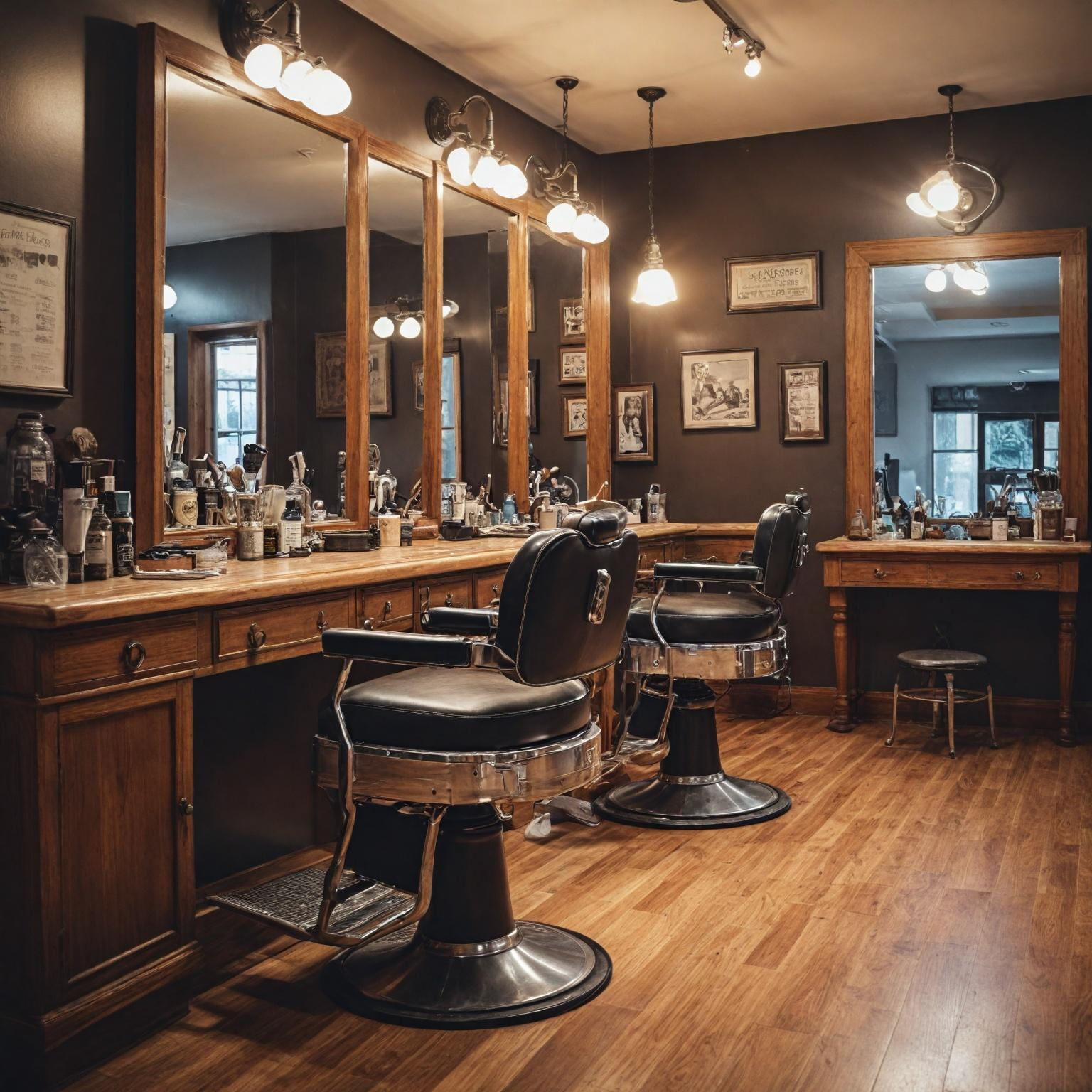
It was an old-fashioned place. Two barber chairs, though Curtis only used one most days. A long counter with combs soaking in blue disinfectant. Bottles of hair tonic nobody had bought since the Eisenhower administration. A ceiling fan that clicked once every revolution. And a great big mirror running nearly the length of the wall.
That mirror had been there longer than Curtis. It had a few dark spots around the edges where the silvering had begun to go, but it still showed a man exactly what he looked like. Which, in some cases, was more information than he wanted.
Curtis said he’d once had a customer ask whether the mirror made him look fat. Curtis told him no, but the biscuits probably did. Unsurprisingly, the man didn’t tip.
⁂
The trouble started on a Thursday afternoon in October. Curtis was trimming Earl’s hair, which was a fairly simple undertaking considering how little of it Earl had left. There were three customers waiting when Earl sat down, but by the time Curtis finished telling a story about a preacher, a mule, and a Baptist revival, they’d all gone home.
Earl said he didn’t blame them. Curtis was working around his left ear when he noticed somebody sitting in the waiting area. He saw the fellow in the mirror. An older man. Gray suit. White shirt. Dark tie. Hat resting on his knees.
Nothing particularly remarkable about him. Except that Curtis hadn’t heard the door open. “Be with you directly,” Curtis said. The man didn’t answer.
Curtis kept cutting. A moment later, he glanced toward the waiting chairs. Nobody there. He looked back at the mirror. There sat the man. Same chair. Same suit. Same hat. Curtis stopped cutting.
Earl opened one eye. “What’s wrong?”
“Nothing.”
“Well, you quit moving.”
“Just thinking.”
“That’s generally when you get into trouble.”
Curtis looked over his shoulder again. Empty chairs. He turned back toward the mirror. The man was still sitting there. This time he appeared to be looking directly at Curtis.
⁂
Now, Curtis Pope wasn’t what you’d call a nervous individual. He’d once removed a hornet’s nest from behind his shop using nothing but a broom and a surprising amount of profanity. He’d also confronted a fellow who tried to leave without paying for a haircut. Curtis told him he could either pay the dollar and a half or have the hair put back.
The fellow paid.
But Curtis didn’t much care for the business with the mirror. He finished Earl’s haircut in record time. Earl looked at himself. “Good Lord, Curtis. Did you use a lawn mower?”
“Looks fine.”
“One side’s shorter than the other.”
“Turn your head a little.”
“That don’t fix it!”
“Well, it fixes it from where I’m standing.”
Earl paid and left, muttering about finding another barber. Curtis locked the door behind him. Then he turned toward the mirror.
The man was gone.
⁂
The following morning, Curtis told the story at the Coffee Cup. Naturally, nobody believed him.
“Maybe you were tired,” Miss Lorene suggested.
“I wasn’t tired.”
“Maybe you need glasses.”
“I’ve got glasses.”
“Maybe you need better ones.”
Curtis looked toward Mr. Blackwelder. “You ever hear of anything like that?”
Mr. Blackwelder considered the question. “Mirrors?”
“No! People showing up in mirrors when they ain’t there!”
“Nope.”
“Well, what do you reckon it was?”
“Reflection, most likely.”
Curtis stared at him.
“Of WHAT?”
Mr. Blackwelder buttered his toast. “Reckon that’s the part you ought to figure out.”
⁂
For three days, nothing happened. Curtis began to think he’d imagined the whole business. Then, on Monday afternoon, the man came back. This time Curtis was alone. He’d just finished sweeping up when he glanced into the mirror and saw the fellow sitting in the same chair. Gray suit. Dark tie. Hat on his knees. Curtis turned around.
Nothing.
Looked back. There he was. Now, a sensible man might’ve left the shop, gone home, and reconsidered his occupation. Curtis Pope was not always a sensible man. He walked toward the waiting area.
“Can I help you?” The chairs were empty. He looked into the mirror. The man was still sitting there. Curtis cleared his throat.
“You waiting on a haircut?”
The fellow slowly raised his head. Then he nodded. Curtis felt the hair on the back of his neck stand up. Which was particularly impressive considering how little of it he had.
“Well,” Curtis said, “I generally take customers in the order they come in.”
The man didn’t move. Curtis swallowed. “Course, looks like you’re the only one here.” The man looked toward the empty barber chair. Then back at Curtis. And smiled. Not a frightening smile. Not a wicked one. Just a small, patient smile. The kind a man gives when he’s been waiting longer than he expected to.
Curtis turned around. The waiting chairs were empty. When he looked back at the mirror, so was the reflection.
⁂
That evening, Curtis went through an old box of pictures he’d kept beneath the counter. There were pictures of the shop in the 1940s and 1950s. Pictures of his father, who’d owned the place before him. Pictures of customers standing outside on Saturday mornings. And one photograph taken in 1958.
It showed Curtis’s daddy standing beside the barber chair. A customer sat beneath the striped cape. And in the waiting area, just behind them, sat a man in a gray suit. White shirt. Dark tie. Hat resting on his knees. Curtis stared at the picture. He knew that face. He’d known it all along. The man’s name was Walter Hensley.
Walter had worked at the cotton mill for years. Quiet fellow. Never married. Lived alone in a little house near the edge of town. He’d come into the barbershop every other Saturday, sat in the same chair, and waited his turn. Never complained. Never hurried anybody. Never said much beyond “Morning” and “Much obliged.”
Curtis remembered him because Walter had been the last customer his daddy ever cut. That was the Saturday before the old man suffered a heart attack and died. Curtis had been working in the shop that morning.
He remembered his daddy finishing Walter’s haircut, dusting the loose hair from his collar, and telling him he’d see him in two weeks. Walter had nodded. “Reckon you will.”
But he hadn’t. Curtis’s daddy was buried the following Wednesday. And Walter Hensley died that winter.
⁂
Curtis didn’t sleep much that night. The next morning, he took the photograph to the Coffee Cup. Miss Lorene studied it. “That’s Walter Hensley.”
Curtis nodded. “Remember him?”
“Course I do. Used to live out by the lumber yard.”
“He’s the man I’ve been seeing.”
Miss Lorene looked up. “In your mirror?”
“Yes.”
She studied the photograph again. “Well, Curtis, maybe he’s waiting for your daddy.”
Curtis shook his head. “Daddy’s been dead nearly thirty-three years.”
“So has Walter.”
“That’s what I’m saying!”
Miss Lorene handed the picture back. “Then I reckon neither one’s in much of a hurry.”
Curtis didn’t appreciate that observation. But Mr. Blackwelder did. He laughed so hard he spilled coffee on his trousers. Which was something nobody in Piedmont had witnessed since 1983.
⁂
The following Wednesday, Curtis decided to settle the matter. He closed the shop early like nearly all businesses in town did. Turned the sign to CLOSED. Pulled down the blinds. And sat in his daddy’s old barber chair facing the mirror. He waited. The ceiling fan clicked overhead. A car passed outside.
Somewhere across the tracks, a train whistle sounded. And then, in the mirror, the man appeared. Walter Hensley. Sitting in the waiting area. Hat on his knees. Curtis looked at him.
“Well, Walter,” he said, “I reckon I know who you are now.” The man nodded.
“You waiting on Daddy?”
Walter didn’t answer.
Curtis sighed. “Well, he ain’t here.”
The man looked toward the second barber chair. The one Curtis hadn’t used in years. The one that had belonged to his father. Curtis followed his gaze. The chair was empty. He looked back at the mirror. Walter was watching it.
And then Curtis noticed something. The second barber chair was turning. Slowly. Just a few inches. As though somebody had put a hand on its back. Curtis stood up. The chair stopped. He looked toward the mirror.
Walter was smiling. And in the reflection, standing behind the second barber chair, was another man. Older. Broad-shouldered. White barber’s coat. A comb tucked into the breast pocket. Curtis knew him immediately.
“Daddy?”
The man in the mirror looked up. And smiled. Then he reached for the striped barber’s cape hanging beside the chair. Curtis turned around. The chair was empty. The cape hung motionless on its hook.
He looked back at the mirror. Walter was standing now. Hat in hand. And Curtis’s daddy was holding the cape open, just as he’d done a thousand times before. Walter stepped toward the chair. Sat down. And the old barber draped the cape around his shoulders.
Curtis watched as his daddy picked up a comb. Then a pair of scissors.
And began to cut.
⁂
Now, Curtis Pope has told some mighty peculiar stories over the years. Most of them involving Elvis Presley. But this one he told only once. To me. And he made me promise not to repeat it while he was alive. I kept that promise.
Curtis said he stood there watching his daddy cut Walter Hensley’s hair until the shop clock struck six. Then the mirror went dark. Not black. Just ordinary. Reflecting the empty shop. The second barber chair. The counter. The bottles of hair tonic. And Curtis himself, standing there with tears running down his face.
He said he never saw Walter again. Never saw his daddy again either. But he did start using that second barber chair. Said it seemed a shame to let a perfectly good chair sit empty. And once in a while, when the shop was quiet and the afternoon sun came through the front windows, Curtis said he could hear scissors working behind him. Just a little sound.
Snip.
Snip.
Snip.
He never turned around. Said he didn’t want to interrupt.
⁂
Now, I don’t know whether Curtis really saw his daddy in that mirror. I don’t know whether Walter Hensley came back for a haircut he’d been waiting nearly thirty-three years to get. And I don’t know whether the dead have any particular interest in looking presentable. But I do know one thing.
A few weeks after Curtis told me that story, I stopped by his shop for a trim. He was finishing up with a customer. I sat down in the waiting area. Picked up an old magazine. And waited.
After a while, Curtis glanced at me in the mirror. “Be with you directly.”
“Take your time.”
He finished the haircut. Dusted the fellow’s collar. Took his money. And turned toward me.
“All right, Jim. You’re next.”
I got up. Walked toward the barber chair. And as I passed the big mirror, I noticed something peculiar. There were three men reflected in it.
Curtis.
Me.
And somebody sitting in the waiting area.
An older man. Gray suit. White shirt. Dark tie. Hat resting on his knees. I stopped. Looked back. The waiting chairs were empty. I turned toward the mirror.
Walter Hensley was still sitting there. Waiting. I looked at Curtis. He was watching me. And for once in his life, Curtis Pope didn’t have a single thing to say.
⁂